


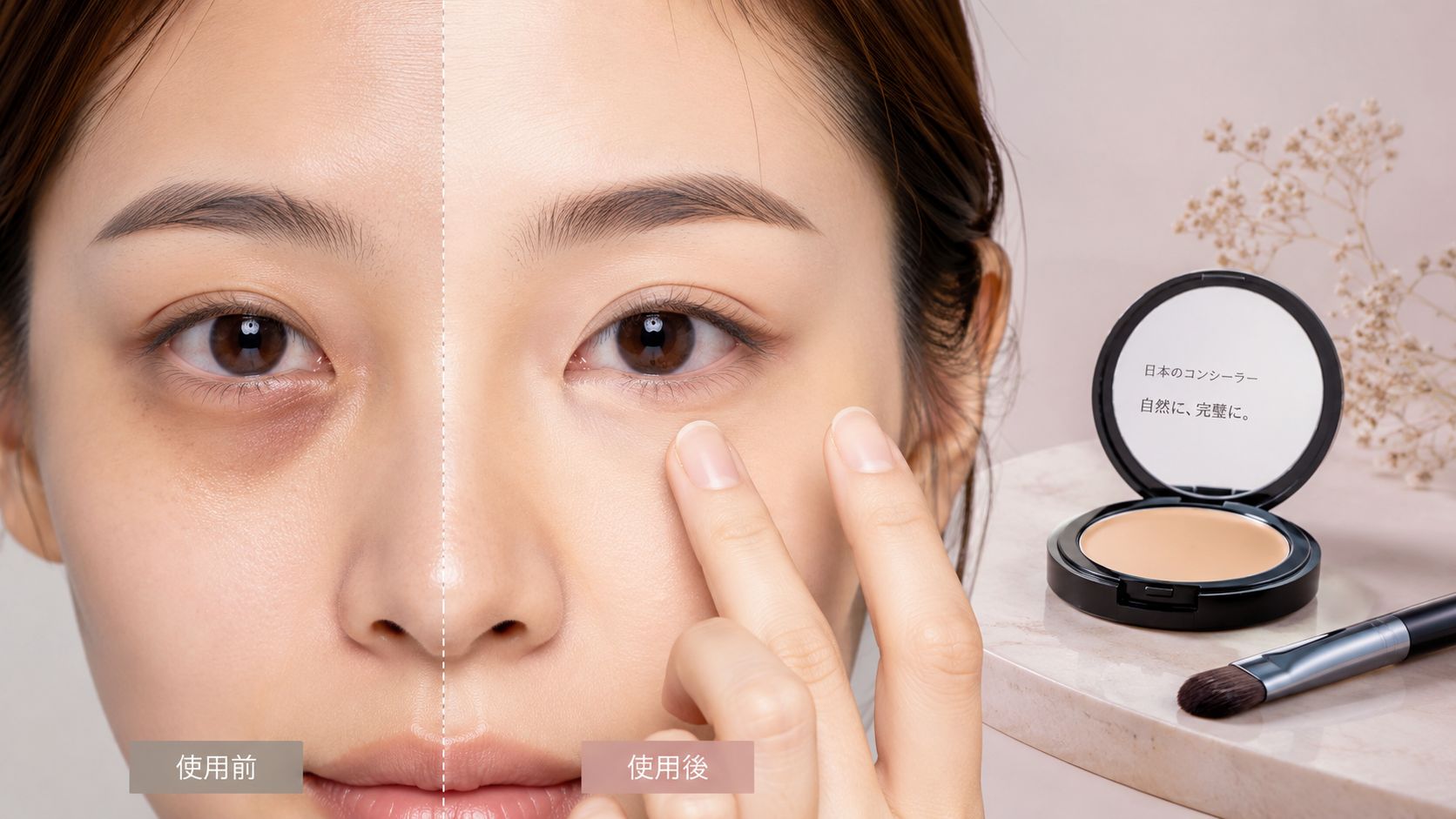
Sie sind wahrscheinlich hier, weil Ihre dunklen Augenringe trotz mehrfachen Concealer-Auftrags immer noch durchscheinen. Das Ergebnis ist oft schlimmer als das Problem. Grauer Schleier, Faltenbildung nahe dem Tränenkanal, Make-up, das auf der Haut sitzt, statt Teil von ihr zu werden.
Ein japanischer Ansatz für Unter-Augen-Make-up löst das anders. Er versucht nicht, den Augenbereich mit dickem Produkt zu überdecken. Er arbeitet mit Hautton, Licht und Platzierung, sodass die Unter-Augen frisch, ausgeruht und glaubwürdig aussehen.
Wenn Sie lernen möchten, wie man Concealer bei dunklen Augenringen aufträgt, ohne dass er cakey aussieht, ist die Antwort meist weniger Produkt, bessere Vorbereitung und präzisere Technik. Das ist die Methode, die in vielen japanischen Schönheitsroutinen verwendet wird, bei denen Haut-zuerst-Make-up genauso wichtig ist wie der Concealer selbst.
Der japanische Ansatz für makellose Unter-Augen
Die japanische Make-up-Kunst bevorzugt Verfeinerung statt Abdeckung. Unter den Augen bedeutet das, zuerst die Farbe der Dunkelheit zu korrigieren und dann nur dort einen hautähnlichen Concealer zu verwenden, wo er das Finish verbessert. Dicke Schichten wirken selten elegant im Tageslicht und betonen eher feine Linien, anstatt sie zu mildern.
Dunkle Augenringe zeigen meist blaue oder violette Untertöne, weil die darunterliegenden Blutgefäße durch die dünne Haut sichtbar werden. Deshalb sind Pfirsich- oder Orange-Korrektoren vor dem Concealer wichtig. Warme Töne neutralisieren kühle Verfärbungen, während Concealer allein oft den bekannten aschigen oder müden Look hinterlässt, wie in diesem Good Housekeeping Leitfaden zum Abdecken von dunklen Augenringen mit Concealer erklärt wird.
Warum eine leichtere Anwendung besser funktioniert
Der Bereich unter den Augen reagiert nicht gut auf Druck. Er reagiert auf Geduld.
In der Praxis ergibt sich das natürlichste Ergebnis durch:
- Gezielte Korrektur nur an der tiefsten Verfärbung
- Dünne Schichten statt einer dicken Schicht
- Abklopfende Bewegungen statt Ziehen
- Hautfarblich passend statt einen sehr hellen Concealer zu wählen
Diese Philosophie ist besonders nützlich, wenn Sie aufhellende Concealer ausprobiert haben, die im Spiegel schmeichelhaft aussahen, aber im natürlichen Licht hart wirkten.
Tragen Sie Make-up dort auf, wo die Dunkelheit ist, nicht dort, wo Sie annehmen, dass es hingehört.
Japanisches Basis-Make-up überschneidet sich auch stark mit Hautpflege. Textur, Feuchtigkeit und Finish werden als ein System behandelt. Deshalb verbessert sich das Unter-Augen-Make-up dramatisch, wenn die Haut richtig vorbereitet wird, und viele augenfokussierte Looks werden mit weichem, ausgewogenem Augen-Make-up statt mit starkem Konturieren kombiniert. Für einen umfassenderen Blick auf dieses Gleichgewicht ist dieser Leitfaden zu Make-up für asiatische Augen ein nützlicher Kontext.
Bereiten Sie Ihre Unter-Augen-Leinwand vor und grundieren Sie sie
Sie beenden die Hautpflege, tragen sofort Concealer auf, und innerhalb einer Stunde sammelt sich das Produkt in den Linien unter dem Auge. Das weist meist auf die Vorbereitung hin, nicht auf den Concealer selbst.
Japanische Make-up-Artists behandeln die Augenpartie oft als Erweiterung der Hautpflege. Die Haut ist dünner und zeigt schneller Dehydrierung, Reibung und überschüssiges Produkt, daher führt eine leichtere Hand zu einem saubereren Ergebnis. Ich habe früh in der japanischen Beauty-Ausbildung gelernt, dass gutes Augen-Make-up einige Minuten vor dem Make-up beginnt.

Lassen Sie die Hautpflege vor dem Make-up einziehen
Feuchtigkeit hilft. Rückstände nicht.
Eine dünne Schicht Augen-Gel, Lotion oder Creme kann trockene Stellen glätten, damit sich der Concealer gleichmäßig verteilt. Wenn die Oberfläche noch rutschig ist, vermischt sich das Pigment mit frischer Hautpflege, anstatt an der Haut zu haften. Das ist einer der Hauptgründe, warum Augen-Make-up verrutscht, früh Fältchen betont oder bis zum Mittag zerfällt.
Ein kurzes Einwirkfenster macht einen sichtbaren Unterschied. Warten Sie, bis sich das Produkt nicht mehr feucht anfühlt und die Oberfläche ruhig statt glänzend aussieht. Bei feuchtem Wetter kann das etwas länger dauern. Bei sehr trockener Haut wollen Sie Komfort, aber keinen glänzenden Film auf der Haut.
Eine praktische Vorbereitungsroutine
Verwenden Sie diese Reihenfolge:
- Tragen Sie eine leichte Schicht Feuchtigkeit mit einem Augenprodukt auf, das die Haut polstert, ohne fettig zu wirken.
- Drücken Sie überschüssiges Produkt mit einem Finger oder einem Tuch ab, wenn die Haut noch glänzt.
- Warten Sie einige Minuten vor dem Make-up, damit die Oberfläche glatt und nicht rutschig wird.
- Tragen Sie Basisprodukte sparsam um die Augen auf, falls Sie sie überhaupt verwenden.
Die Produktqualität ist sehr wichtig. Viele japanische Formeln sind so konzipiert, dass sie nah an der Haut liegen, was für die Augenpartie ideal ist. Wenn Sie eine Hautpflege-First-Vorbereitung bevorzugen, kann eine ausgleichende Emulsion oder eine leichte Augenpflege aus Linien wie Shiseido Elixir helfen, die Haut zu beruhigen, ohne dass der Concealer darauf „schwimmt“.
Morgendliche Schwellungen verändern ebenfalls die Platzierung. Eine reichhaltige Creme kann geschwollene Augen schwerer wirken lassen, während kühlende Pflege oft eine glattere Oberfläche schafft. Wenn Schwellungen bei Ihnen zur Routine gehören, können diese japanischen Augenpflaster-Tipps helfen, die Augenpartie vor der Farbkorrektur vorzubereiten.
Praktische Regel: Wenn sich die Augenpartie noch feucht anfühlt oder zu glänzend aussieht, warten Sie. Concealer lässt sich besser auf eingezogener Haut auftragen.
Wählen Sie Ihren perfekten japanischen Korrektor und Concealer
Die Wahl der richtigen Produkte für die Augenpartie dreht sich nicht darum, den hellsten Concealer in der Schublade zu finden. Es geht darum, die Dunkelheit zuerst zu neutralisieren und dann den Hautton so genau abzustimmen, dass der Augenbereich weiterhin wie Haut aussieht.
Japanische Concealer-Formeln werden oft aus diesem Grund geliebt. Viele sind so konzipiert, dass sie kontrollierte Deckkraft ohne dickes, trockenes Finish bieten. Das macht sie besonders nützlich, wenn du eine Korrektur möchtest, die im Gesicht verschwindet.

Beginne mit dem Unterton, nicht mit der Marke
Für effektive Farbkorrektur wähle einen pfirsichfarbenen Korrektor für sehr helle bis mäßig helle Hauttöne und einen aprikosenfarbenen Korrektor für mittlere bis tiefe Hauttöne, um blaue Untertöne zu neutralisieren. Trage ihn mit einer tupfenden Bewegung mit einem Schwamm auf, um die Ränder zu verwischen, ohne das Pigment zu verschieben, wie in Cliques Anleitung zum Kaschieren dunkler Augenringe beschrieben.
Diese Regel ist leichter anzuwenden, wenn man in Paaren denkt:
- Hellere Haut plus blaue oder violette Ringe profitiert meist von Pfirsich
- Mittel bis tiefe Haut plus blau getönte Dunkelheit profitiert meist von Aprikose
- Tiefere braune oder gräuliche Dunkelheit braucht oft mehr Wärme, tendiert zu Orange
Farbkorrektur-Auswahlhilfe
| Hautfarbe | Farbe der dunklen Augenringe | Empfohlener Korrektor-Farbton | Buy Me Japan Produktbeispiel |
|---|---|---|---|
| Sehr helle bis mäßig helle Haut | Blau oder Lila | Pfirsich | Canmake Color Mixing Concealer |
| Mittel | Blau getönte Dunkelheit | Aprikose | Cezanne Concealer-Optionen |
| Tief | Braune, graue oder tiefere kühle Dunkelheit | Warmer Aprikosen- bis Orangeton | Kirei & co. Concealer-Optionen |
Die Textur ist genauso wichtig wie der Farbton
Einige Produktformate passen zu unterschiedlichen Bedürfnissen:
- Cremepaletten funktionieren gut für gezielte Korrekturen. Sie sind nützlich, wenn deine Dunkelheit im inneren Augenwinkel konzentriert ist und du Kontrolle möchtest. Canmakes Concealer-Paletten sind aus diesem Grund beliebt.
- Flexible flüssige Concealer eignen sich eher für trockenere oder reifere Haut unter den Augen, da sie sich in dünnen Schleiern verteilen.
- Stretch-Texturen können hilfreich sein, wenn du eine Deckkraft möchtest, die sich mit der Mimik bewegt, statt steif obenauf zu liegen.
Wenn du allgemein japanisches Make-up einkaufst, bietet dieser Überblick über die besten japanischen Kosmetikmarken nützlichen Kontext dazu, was verschiedene Marken gut können.
Ein guter Unter-Augen-Match sollte sich nicht bemerkbar machen. Er sollte Schatten leise ausgleichen und die Form des Augenbereichs erhalten.
Meistere die Kunst der japanischen Concealer-Anwendung
Du beendest deine Grundierung, trägst Concealer unter den Augen auf, und der Bereich wirkt plötzlich schwerer als die Dunkelheit zuvor. Das liegt meist an der Platzierung, nicht an der Produktqualität. Die japanische Technik für unter den Augen bleibt kontrolliert, dünn und präzise, sodass die Haut weiterhin wie Haut aussieht.

Corrector nur dort auftragen, wo Dunkelheit vorhanden ist
Untersuche den Schatten, bevor du das Produkt aufträgst. Bei vielen Gesichtern sitzt die tiefste Farbe in der inneren Vertiefung nahe dem Tränenkanal, mit einer kleineren Stelle am äußeren Augenwinkel. Die ganze Unter-Augen-Fläche abzudecken, macht die Form flacher und kann Schwellungen deutlicher machen.
Verwende zuerst eine winzige Menge Corrector. Setze ihn genau auf den blauen, violetten oder braunen Farbton und klopfe mit dem Ringfinger oder einem kleinen, dichten Pinsel. Ich bevorzuge den Ringfinger bei sehr trockenen Augen, weil die Wärme die Cremeformel sanft einarbeitet, ohne zu ziehen. Bei geschwollenen Augen sollte das meiste Produkt in der Vertiefung bleiben, nicht auf der Schwellung selbst. Das Aufhellen der Schwellung kann sie hervorheben.
Lass die Haut an den Rändern durchscheinen. Dieses sanfte Verblenden ist einer der größten Unterschiede zwischen einem natürlichen japanischen Finish und einem dickeren, westlichen Unter-Augen-Look.
Nutze Druck, der verbindet, nicht Bewegung, die verteilt
Andrücken bringt bessere Ergebnisse als Streichen. Kurzes Klopfen hält den Corrector an der Stelle, während Reiben das Pigment in nicht dunkle Bereiche verteilt.
Große Dreiecke sind selten nötig. Eine kleinere Form wirkt auf echter Haut besser, besonders bei Tageslicht. Beginne am inneren Augenwinkel, weiche bei Bedarf leicht nach unten ab und höre dann auf. Sieht auch der äußere Augenwinkel müde aus, setze dort einen zweiten kleinen Punkt, statt das Produkt über die ganze Fläche zu verteilen.
Eine saubere Reihenfolge hilft:
- Corrector nur auf die verfärbten Stellen auftragen
- Sanft verblenden, bis die Ränder in der Haut verschwinden
- Concealer nur dünn auftragen, genau dort, wo noch Schatten sichtbar sind
- Einmal mehr andrücken, damit die beiden Schichten eins werden
Dieser langsame Aufbau sorgt für Deckkraft ohne den dicken, pudrigen Look.
Passe die Platzierung an deine Augenform an
Die Technik sollte der Struktur folgen. Sind die Augenpartien eingefallen, kann ein Hauch Concealer knapp unter der tiefsten Linie die Fläche glatter erscheinen lassen, weil er Licht in die Vertiefung bringt. Sind die Augenpartien geschwollen, sollte die Aufhellung enger und höher bleiben. Ziel ist es, Schatten zu mildern, nicht Volumen aufzuhellen.
Das ist ein Kompromiss, den Künstler schnell lernen. Mehr Helligkeit kann Dunkelheit ausgleichen, aber auch Textur, Tränensäcke oder feine Linien betonen. Weniger Produkt wirkt oft frischer.
Japanische Formeln von Marken wie Canmake und Cezanne belohnen diese Zurückhaltung. Sie wirken am besten in dünnen Schichten, besonders nachdem die Hautpflege vollständig eingezogen ist, statt in einem dicken Auftrag.
Was das sauberste Ergebnis liefert
Was funktioniert:
- Kleine, präzise Platzierung am inneren Augenwinkel und bei konzentrierter Dunkelheit
- Dünne Schichten, die eingedrückt und nicht verteilt werden
- Eine kleine Aufhellungszone statt eines großen Dreiecks unter dem Auge
- Direkt und leicht nach unten in natürlichem Licht schauen
Was Probleme verursacht:
- Das ganze Unter-Auge einhüllen, bevor man den Schattenbereich bestimmt
- Sehr leichten Concealer verwenden, um dunkle Ringe abzudecken, anstatt sie zuerst zu korrigieren
- Produkt über geschwollene Stellen ziehen, die nur eine kleine Menge in der Vertiefung brauchen
- Verblenden mit einem Pinsel, der mit altem Cremeprodukt verstopft ist
Die Hygiene der Werkzeuge beeinflusst das Ergebnis mehr, als viele denken. Wenn Ihr Pinsel anfängt zu überspringen oder ungleichmäßige Kanten hinterlässt, reinigen Sie ihn, bevor Sie die Formel verantwortlich machen. Dieser Guide zum richtigen Reinigen von Make-up-Pinseln ist hilfreich, wenn Ihr Concealer-Pinsel zu ziehen beginnt.
Für eine visuelle Demonstration von Handhaltung und Druck ist dieses Tutorial sehenswert:
Wenn die erste Schicht leicht transparent wirkt, ist das oft ein gutes Zeichen. Unter den Augen sieht man meist nach zwei dünnen Schichten besser aus als nach einer dicken.
Fixieren und perfektionieren Sie Ihren Look für den ganzen Tag
Selbst perfekt aufgetragener Concealer kann zerfallen, wenn man den Fixierschritt eilig macht. Zu früh aufgetragener Puder nimmt Feuchtigkeit auf, wird pastös und macht jedes Blinzeln sichtbarer.
Dieser Teil ist technisch, aber einfach, wenn man die Reihenfolge kennt.

Warten Sie, bevor Sie pudern
Ein entscheidender technischer Schritt zur Vermeidung von Fältchen ist ein obligatorisches einminütiges Trocknen zwischen Concealer-Auftrag und Puder-Fixierung. So wird verhindert, dass der Puder zu früh Feuchtigkeit aufnimmt. Verwenden Sie eine Velours-Puderquaste, um eine dünne Schicht losen, transparenten Puder aufzutupfen, denn Tupfen erhöht die Deckkraft, während Wischen die Deckkraft laut diesem Concealer-Fixier-Guide um bis zu 40% reduzieren kann.
Diese Minute entscheidet oft über Erfolg oder Misserfolg vieler Augenroutinen.
So fixieren Sie, ohne die Deckkraft zu stören
Verwenden Sie eines dieser Werkzeuge:
- Velours-Puderquaste für das kontrollierteste Tupfen
- Kleiner, fluffiger Pinsel, wenn Sie ein weicheres Finish bevorzugen
- Minimale Puderplatzierung, konzentriert auf die Fältchen, nicht bis zum Wimpernkranz
Der Schlüssel ist das Tupfen. Wischbewegungen verteilen das Produkt und verdünnen die gerade korrigierte Stelle.
Eine praktische Abschlussroutine sieht so aus:
- Concealer verblenden
- Eine Minute warten
- Eine sehr dünne Puderschicht auftupfen
- Überschüssiges Puder bei Bedarf sanft abstauben
Fein gemahlene japanische Puder passen oft gut zu diesem Stil, da sie meist so hergestellt sind, dass sie verwischen, ohne trocken auszusehen. Das Cezanne UV Clear Face Powder ist ein Beispiel, das viele für ein leichtes, perfektes Finish schätzen.
Puder sollte das Make-up fixieren, nicht zur Arbeit werden.
Wenn Langlebigkeit Ihre Hauptsorge ist, besonders bei warmem Wetter, kann ein Fixierspray den Look vervollständigen, ohne die Textur unter den Augen zu verstärken. Dieser Leitfaden zum japanischen Fixierspray ist ein guter nächster Schritt.
Häufige Probleme mit Under-Eye-Concealer beheben
Manche Probleme unter den Augen sprechen nicht auf Standardtipps an, weil das Problem nicht nur Dunkelheit ist. Es kann Schwellungen, Trockenheit oder Textur sein, die beeinflussen, wie Licht die Stelle trifft.
Geschwollene Tränensäcke brauchen eine andere Platzierung
Ein häufiger Fehler ist, geschwollene Tränensäcke direkt mit Concealer abzudecken, was sie betont. Die bessere Methode ist, nur eine dünne Linie Korrektor oder helleren Concealer im Schatten unter dem Tränensack aufzutragen. Diese Platzierung erzeugt eine Lifting-Illusion, indem sie den Schatten aufhebt, anstatt den erhöhten Bereich hervorzuheben, wie in diesem Leitfaden zur Concealer-Anwendung bei geschwollenen Augen erklärt.
Dies ist einer der nützlichsten fortgeschrittenen Tricks, weil er die Struktur verändert, nicht nur die Farbe.
Kleine Korrekturen für häufige Probleme
- Wenn Ihr Concealer aschig wirkt, wählen Sie einen wärmeren Korrektor statt eines helleren Concealers.
- Wenn es sich an trockenen Stellen absetzt, reduzieren Sie den Puder und stellen Sie sicher, dass Ihre Hautpflege vollständig eingezogen ist, bevor Sie Make-up auftragen.
- Wenn es im Tageslicht auffällig aussieht, ist der Farbton wahrscheinlich zu hell oder das Produkt reicht zu weit über die eigentliche Dunkelheit hinaus.
- Wenn Dunkelheit unter den Augen mit größeren Pigmentierungsproblemen einhergeht, kann Make-up das Erscheinungsbild mildern, aber manche möchten auch Behandlungsmöglichkeiten verstehen. Ein ausgewogener Überblick wie dieser Leitfaden zur Laser-Pigmententfernung hilft, kosmetische Abdeckung mit professionellen Ansätzen zu vergleichen.
Für reife Augenpartien kommen die sanftesten Ergebnisse meist von flexiblen Formeln, minimalem Puder und disziplinierter Anwendung. Bei sehr trockener Haut verbessert oft eine kleine Anpassung der Vorbereitung das Ergebnis mehr als ein kompletter Wechsel des Concealers.
Make-up für die Augenpartie sieht am besten aus, wenn es die Gesichtsarchitektur respektiert. Dunkelheit, Hohlräume und Schwellungen erfordern jeweils eine andere Behandlung.
Wenn Sie bereit sind, authentische japanische Concealer, Korrektoren, Puder und Hautpflege von vertrauenswürdigen Marken wie Canmake, Cezanne, Shiseido Elixir, Kate, Chifure und Kirei & co. zu kaufen, macht Buy Me Japan es einfach, echte Produkte direkt aus Japan zu finden. Es ist ein zuverlässiger Ort, um japanische Beauty-Basics zu vergleichen, Formeln auszuwählen, die zu Ihrer Haut passen, und eine leichtere, präzisere Augenpartie-Routine mit Vertrauen aufzubauen.


Compartir:
Anti-Aging BB-Creme: Ein Leitfaden zu japanischen Formeln
Elektrischer Wasserkocher Japanisch: Ihr Kaufratgeber 2026 für den besten Kauf