


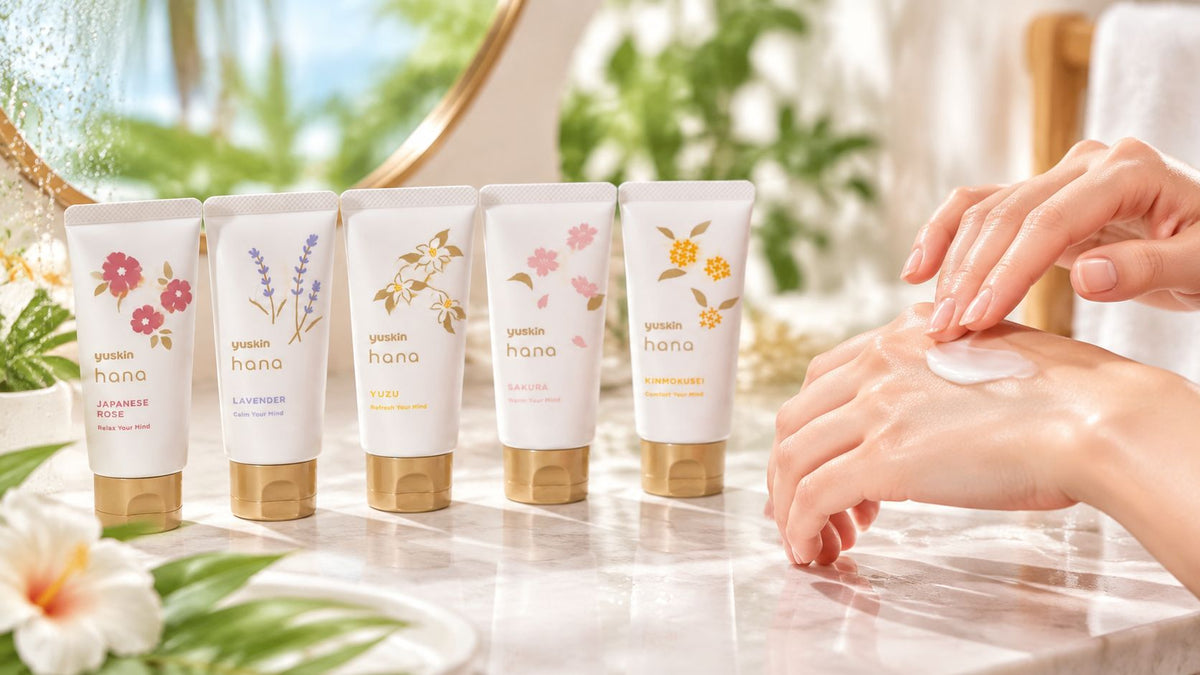
Yuskin Hana suits everyday daytime moisturising with a light, scented feel, while standard Yuskin cream is the richer option for chapped or cracked hands. The better choice is the one that fits your skin's condition and the moments when you'll really use it.
But why compare hand creams only by how rich they feel, when a key difference may be whether you'll reapply them after washing? A cream that feels comfortable at your desk can serve a different purpose from one you're happy to leave on overnight. Yuskin cream vs Hana hand cream is a fit-to-situation decision, not a contest with a universal winner.
Yuskin Cream and Hana Hand Cream at a Glance
Standard Yuskin cream and the Hana range aren't intended to do exactly the same job. The naming can confuse shoppers, especially when an overseas listing uses Hana without making its connection to Yuskin clear.
According to Yuskin's official product information, the standard cream is positioned for chapped skin, cracked skin and chilblains, while Yuskin hana is a daily moisturising hand cream with a lightly floral fragrance; the company also states that Yuskin A was renewed as Yuskin on September 1, 2020, while retaining its efficacy. Those are manufacturer descriptions, not a reason to self-treat persistent skin problems.
Yuskin cream and Yuskin Hana Hand Cream compared
| Feature | Yuskin cream, standard | Yuskin Hana Hand Cream |
|---|---|---|
| Positioning | Manufacturer describes use for chapped skin, cracked skin and chilblains | Daily moisturising with a lightly floral fragrance |
| Listed actives or highlighted ingredients | Tocopheryl acetate, glycyrrhetinic acid, dl-camphor and glycerin, with published amounts detailed below | Glycerin, tocopherol acetate and pyridoxine HCl; amounts aren't stated in the catalog description |
| Fragrance | Distinctive camphor scent | Scent options shown on the product page |
| Steroids | Official product document states no steroids | Steroid status isn't specified in the catalog description |
| Suggested use | Several times daily, including after water-based housework, bathing and before sleep | Everyday hand moisturising during the day |
| Size | Check the exact standard-cream package | Yuskin Hana Hand Cream 50g (Various Scents) |
| Catalog listing | Not listed in the catalog information available for this comparison | Listed; check the product page for current purchasing options |
A missing catalog detail isn't proof that an ingredient is absent. Equally, a familiar brand name doesn't mean related products share the same formula. Compare the exact product and variant, rather than assuming every Yuskin tube is interchangeable.
Start with your actual requirement
Before comparing fragrance descriptions or packaging, answer these questions:
- What must the cream do? Make normally comfortable hands feel softer, or provide a more substantial layer on visibly dry areas?
- How much fragrance will you tolerate? A pleasant scent during an occasional application may feel intrusive when reapplied throughout a working day.
- How often will you reapply? A convenient daytime cream can be more useful than a richer formula you avoid using.
Your practical pick: start with Hana for routine daytime comfort. Consider standard Yuskin as a different, more intensive-care category, rather than assuming it's a stronger version of the same purchase.
Why Dry Hands Need Different Care in Humid Weather
Humid weather doesn't automatically mean your hands should feel well moisturised. Frequent washing, sanitiser, detergent exposure and time in air-conditioned rooms can still leave them uncomfortable, even when the outdoor air feels damp.
The useful distinction is between the weather around you and what happens to your hands. Someone moving between a humid commute, an air-conditioned office and repeated handwashing may need different textures at different points in the day.

Match the finish to the setting
A heavy layer in humid heat can feel like wearing a raincoat in a sauna. It may be useful as a protective covering, but it isn't necessarily comfortable when you're sweating or gripping a phone.
Humidity slows evaporation, and a rich surface layer can make damp hands feel clammy. A lighter formulation may spread more comfortably, although lightweight doesn't guarantee faster absorption for every formula or every person.
- For daytime errands: consider light lotions, gel-like emulsions or lighter creams that don't interfere with handling bags and screens.
- For very dry patches: reserve richer textures for the areas that need them, rather than coating every surface equally.
- For an air-conditioned desk: judge the cream after you've settled indoors, not only while you're still warm from travelling.
The texture-selection approach in this guide to Japanese moisturisers for oily skin is useful here too: comfort and an appropriate finish matter more than choosing the richest product available.
Practical rule: choose the amount and texture for the hands you have that day, not for the season printed on a shopping guide.
Try a pea-sized amount on clean, slightly damp hands after washing. Let it settle before touching a keyboard, then check whether your palms still feel tacky after you've resumed your routine.
Your humid-day pick: use the lighter option when stickiness discourages application, and keep a richer layer for localised dryness or a quieter evening.
Ingredients That Matter and What to Watch For
Before buying, make these label checks:
- Look for glycerin: note its position on a full ingredient list, while remembering that a medicated label may separate active ingredients from the remaining formula.
- Identify fragrance: check the exact variant rather than relying on the range's overall description.
- Check the base: look for emollient or occlusive ingredients when surface roughness and persistent dryness are your main concerns.
Those three checks tell you more than any single hero ingredient. A good hand cream can combine several functions, so the presence of one familiar name does not establish how the finished cream will feel or spread.
Humectants, including glycerin, attract and hold water in the outer skin layers. Hyaluronic acid and its related ingredient sodium hyaluronate also serve this water-binding role. Emollients help smooth the skin surface and improve slip. Fatty ingredients can make rough-feeling skin feel more supple, while also influencing spread. Occlusives form a surface film that slows moisture loss. Categories overlap, since one ingredient can add both softness and a more protective finish.
The official Yuskin A product document lists, per 1 g, tocopheryl acetate at 2 mg, glycyrrhetinic acid at 2 mg, dl-camphor at 8 mg and glycerin at 0.4 g, and explicitly states that the product contains no steroids.
The Hana catalog description highlights glycerin, tocopherol acetate, a vitamin E derivative, and pyridoxine HCl, a form of vitamin B6. It describes the vitamins in antioxidant terms, but that is not evidence that the cream treats inflammation or repairs a medical skin condition.
Comfort matters as much as the ingredient headline. Camphor brings a distinctive cooling sensation. Some people enjoy it. Others find it uncomfortable, and on cracked or freshly washed skin that cooling can register as stinging.
Scent needs the same scrutiny. A scented cream can be a poor fit for hands that react to fragrance, so confirm the variant instead of assuming the whole range smells the same. A quick-drying formula is not automatically gentler either. Alcohol-heavy formulas may feel light but can be uncomfortable on already dry hands, while a heavier oily finish may suit night use and feel inconvenient during a warm commute.
Your ingredient-led pick: stop using a formula that burns, itches or leaves a finish you dislike, even when its active list looks impressive. I recommend keeping the comfortable daily formula for daytime and reserving the stronger-feeling option for short, localised evening use.
Matching Each Cream to Your Routine and Switching Signals
Which cream fits the parts of your day when you're most likely to use it? A convenient daytime formula may suit frequent applications, while an evening option can work when you have more time to let it settle.
In a double-blind randomised handwashing study indexed by PubMed, 132 participants underwent repeated occupational-style handwashing over two weeks; the no-moisturiser control group's clinical skin condition worsened, while the moisturiser groups did not show comparable deterioration. The study does not establish a winner between Yuskin and Hana. It supports regular moisturising, not a claim that one cream is superior.
Choose around the moments you'll use it
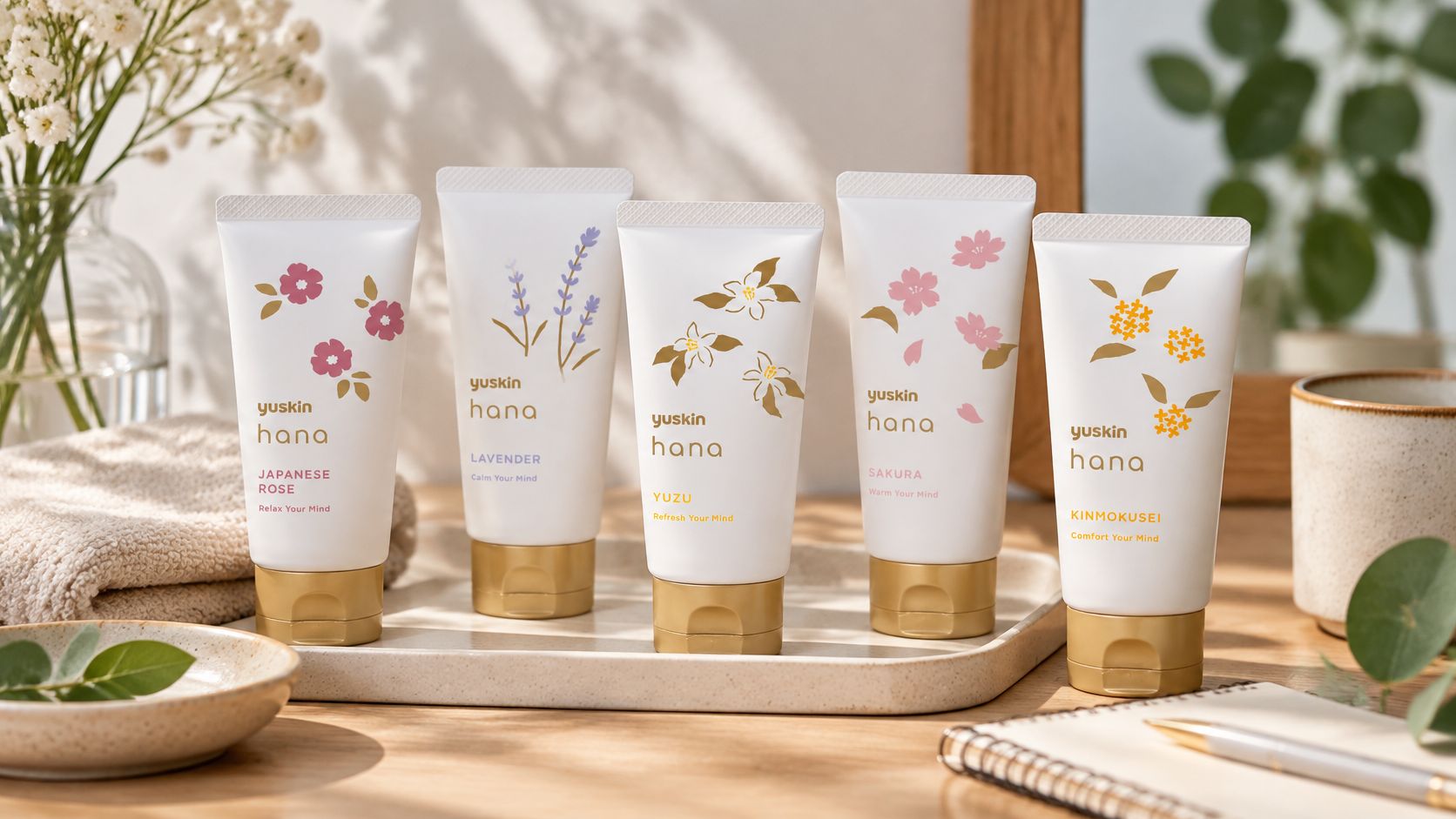
For work or commuting, Hana may be a practical starting point if you prefer its described smooth, creamy formula and non-greasy finish. That feel can be easier to manage when you need to handle documents, a phone or public-transport straps. Its scent is a trade-off, so choose a variant you're comfortable using repeatedly.
The catalog product image helps distinguish the Hana range from standard Yuskin packaging.
For evening use, Kao Curél Intensive Moisture Care Moisture Hand Cream 50g is a catalog option intended for dry hands. Its description lists glycerin, eucalyptus extract, allantoin and vitamin E, and describes a non-greasy finish. Those details don't establish that it is richer than Hana.
Which cream fits each moment of the day
| Moment | Better fit | Why |
|---|---|---|
| Frequent handwashing at work | Hana daytime formula | Its described finish may suit repeated use when you need to get back to handling things |
| Morning commute | Hana daytime formula | A lighter-feeling application may be more comfortable while travelling, if you like the scent |
| Bedtime | Curél hand cream | A dry-hand-focused catalog option to consider for evening use |
| Visibly cracked or very dry hands | Curél hand cream on intact dry areas, with a clinician if cracks persist | Moisturising may suit intact dry skin; persistent cracks need more than a shopping decision |
Build an application routine you can maintain
- Choose a reliable cue. Keep the cream where you'll notice it after washing or before bed.
- Use an amount that feels comfortable. Start with a thin layer and adjust if your hands still feel dry or the finish bothers you.
- Reapply after washing when needed. An accessible tube makes it easier to keep up the routine.
- Use a more generous layer at night if needed. Focus on intact dry areas rather than automatically applying a heavy coat everywhere.
- Patch-test a new formula before routine use. Avoid introducing several new hand products at once if you're trying to identify what your skin tolerates.
For broader selection criteria, the guide to Japanese hand cream for dry skin covers how texture and intended use can shape your choice.
Know when to change the plan
If you leave greasy marks, dislike the scent or keep skipping applications because the cream feels heavy, try using less first. If the finish still gets in the way, choose a formula that better suits your daytime routine.
If intact skin remains flaky or tight despite consistent use, consider a more substantial moisturising layer. Fissures call for more caution, especially when painful or repeatedly reopening.
The Hana lavender catalog description lists fragrance alongside glycerin and emollients such as stearic acid and glyceryl stearate. Check the exact variant if you're sensitive to fragrance; a pleasant scent does not guarantee compatibility.
A cream you'll use comfortably is a more practical daily choice than one you avoid. Stop using a product and speak with a healthcare professional if itching, redness or burning spreads beyond the application area or persists. Your routine-based pick: choose Hana for daytime convenience if its scent and finish suit you; consider Curél for an evening layer on intact dry skin.
Fixing Common Hand Cream Problems in Hot Climates
In humid weather, a greasy finish may come from using too much cream, applying it over damp or sweaty hands, or choosing a texture that feels too rich for daytime. Start with a smaller amount and let it settle before deciding whether the formula suits your routine.
Try it while holding your phone or doing another everyday task. If the residue still gets in the way, reserve that cream for a time when the feel is less bothersome.
Hand cream symptoms, likely causes and fixes
| Symptom | Likely cause | What to try |
|---|---|---|
| Sticky or greasy after settling | Too much product or a rich base in humid heat | Use less, allow it to settle, and choose a lighter daytime texture if needed |
| Stinging or burning on cracks | Cracked skin may be sensitive to application | Stop, rinse gently, and ask a pharmacist or doctor if symptoms persist; don't repeatedly retry a product that stings |
| Tight hands after washing | Moisturiser applied late or in too small an amount | Apply to clean, slightly damp hands promptly after washing |
| Dry patches return by afternoon | Frequent washing, sanitiser or household exposure | Reapply during the day and wear suitable gloves for wet housework |
| Cracks not healing or spreading redness | A problem that may need assessment, including possible dermatitis or infection | Stop using the suspect product and see a doctor |
These steps can help address application discomfort. A rash or persistent symptoms need professional assessment; changing the amount or timing of a cream won't establish the cause.
Test cautiously and store sensibly
If you're considering a new product, apply a small amount to a limited area of intact skin first. Watch for itching, redness or swelling before broader use, and don't test directly on an open fissure. A small test cannot rule out a later reaction.
If you've already had a clear reaction, ask a healthcare professional before trying the product again. A home test does not replace clinical allergy testing.
The difference between surface dryness and ongoing skin problems can also guide your choice of a barrier repair moisturiser. Avoid adding several new products at once if you're unsure which one is causing discomfort.
Storage check: keep the tube capped and away from direct sunlight. Don't leave it in a parked car or a persistently steamy bathroom.
Follow the packaging's storage directions. Stop using the cream if its smell, appearance or texture changes noticeably, and seek medical advice for persistent cracks or spreading redness.
Choose the Right Hand Cream Before You Buy
Which tube should go in your bag tomorrow? Start with the day you have planned. Frequent washing, keyboard work and commuting reward a lighter layer that spreads fast and lets you reapply without residue. Long dry evenings reward a thicker layer applied once and left to settle.
Make the final checks
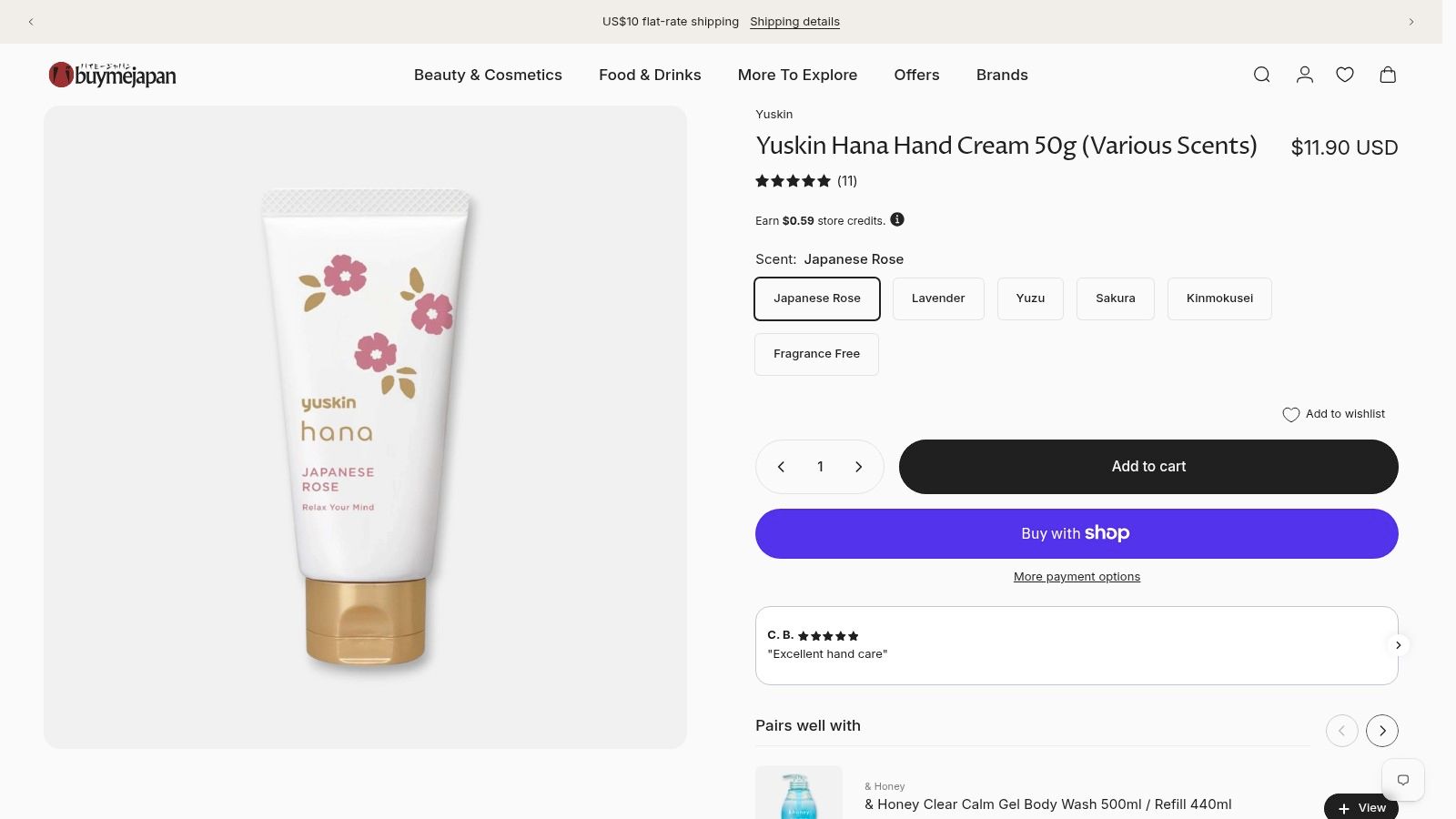
- Confirm the variant: check the current scent options, package size and ingredient information.
- Check purchasing status: a catalog listing doesn't guarantee that every option is currently available.
- Plan for tolerance: patch-test before daily use, especially if your hands are reactive.
- Set a medical boundary: persistent cracks, spreading redness or continuing discomfort need a pharmacist or doctor.
For extra selection guidance, consult the guide to Japanese skincare for sensitive skin. I recommend choosing for suitability first. First-time shoppers who sign up get a 10% off coupon.
The following video is available as an additional viewing option.
Use the product page to identify the exact item before ordering. Pick one daytime tube for regular reapplication and, only if your hands still feel tight by evening, add a richer night layer instead of using more of the same cream through the day.
Buy Me Japan connects consumers with Japanese beauty, cosmetics, food and drinks, including curated brands such as Shiseido Elixir and Canmake. Visit Buy Me Japan to explore the hand-care options in the all-products collection and match a formula to your routine, fragrance preference and moisturising needs.


Compartir:
Polvo Club Suppin vs crema vs UV: cómo elegir el formato adecuado en 2026