


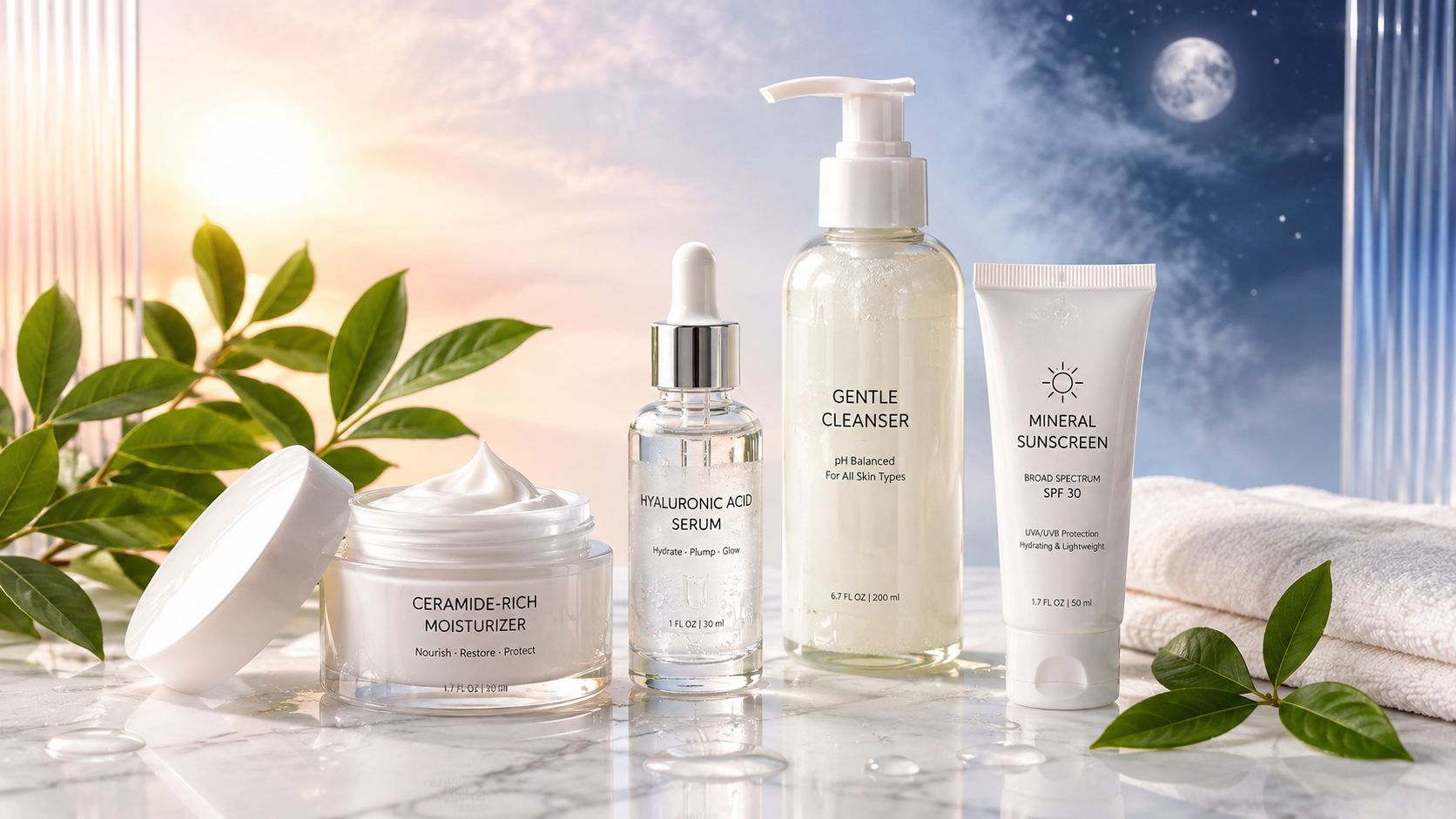
Your skin can feel fine in the morning, then turn stingy, tight, and oddly shiny by afternoon. That is usually the moment people realize their routine has stopped helping and started getting in the way.
A proper barrier repair skincare routine is less about piling on more products and more about choosing the right textures, the right lipids, and the right timing. If you're trying to keep treating acne, pigmentation, or texture without making your face feel raw, the bridge plan matters just as much as the repair phase.
What a Damaged Skin Barrier Actually Feels Like
The first sign is often small and annoyingly specific. Tap water burns on the cheeks. Foundation catches on dry patches near the jaw. Moisturizer feels great for ten minutes, then the tightness comes back like nothing happened.

What's really happening in the stratum corneum
The outer layer of skin, the stratum corneum, is supposed to keep water in and irritants out. When it's compromised, the skin loses that balance, so transepidermal water loss rises and the surface becomes easier to irritate. That's why products that used to glide on can suddenly pill, sting, or disappear without making the skin feel comfortable.
Over-exfoliating retinoid users notice this first, especially when they keep pushing through dryness because they assume it's “purging.” People who switch to stronger foaming cleansers during seasonal changes also run into it fast. The skin doesn't just look drier, it starts behaving like a surface with too many gaps.
If you've ever had the feeling that your face is both oily and flaky, that's a classic compromise pattern. The skin can overproduce shine while still losing water, which is why “just moisturize more” often fails.
Practical rule: if your skin stings, feels hot, or flakes within hours of cleansing, the problem is usually not a lack of products. It's a barrier that needs less friction and fewer actives.
A gentle reset is usually smarter than doubling down. That's also why routines built around soothing ingredients, like the approach in what cica does for irritated skin, tend to feel so much more workable when skin is already upset.
The Lipid Science Behind Faster Barrier Repair
A barrier repair skincare routine works because it replaces what skin is missing, not just what it feels it's missing. The skin's lipid barrier is structurally organized around a 3:1:1 molar ratio of ceramides to cholesterol to free fatty acids, and that ratio shows up again and again in barrier-focused formulas because it supports the way the barrier organizes itself. The point isn't only hydration, it's restoring the lipid structure that helps the stratum corneum stay sealed.
Why ceramides alone usually underdeliver
Ceramides get most of the attention, but they don't work alone in a healthy barrier. Cholesterol and free fatty acids act like the spacing and support that let ceramides form the lamellar layers properly. A cream with only one lipid family can feel nice on contact, yet still leave the skin looking dull or tight because the architecture isn't fully supported.
That's why many barrier creams feel more substantial than a simple gel moisturizer. They don't just sit on the surface, they try to match the skin's own lipid layout. In practical terms, a well-built triple-lipid formula often feels less slippery and more cushioning, almost like it disappears into the skin while still leaving a soft seal behind.
The supporting ingredients that make repair easier
Niacinamide earns its place because the same source reports it can increase ceramide biosynthesis by 4.1–5.5× by upregulating serine palmitoyltransferase, the rate-limiting enzyme in sphingolipid production (source on niacinamide and barrier lipids). That's a strong reason it shows up so often in barrier serums and moisturizers.
For eye-area dryness, the texture matters just as much as the ingredient list. Gentle, clinically minded advice on keeping that area comfortable is worth reading alongside a broader repair plan, so clinical advice for eye dryness can be useful if the under-eye area is part of the problem.
A good barrier formula should feel boring in the best way, smooth, cushiony, and non-stinging. If it burns on application, the skin isn't ready for that product yet.
The best Japanese barrier products often lean into this logic with ceramides, cholesterol support, and amino-acid-based hydration rather than relying on a single flashy active. That's part of why Japanese formulas from brands like Hada Labo, Curél, and Minon have such a loyal following among people trying to calm a reactive face.
Your Morning Routine Step by Step
Start the morning as if the skin is still healing, because it is. Skip anything that creates drag, heat, or foam overload, and keep the cleanse as short as possible. If your face doesn't feel greasy on waking, a rinse with lukewarm water can be enough for some people, while others do better with a very gentle pH-balanced cleanser.

Build the morning around low-friction layers
A hydrating layer comes next. Look for a lotion or essence with glycerin or hyaluronic acid, then follow with a ceramide-dominant moisturizer while the skin is still slightly damp. That damp skin step matters because it helps the moisturizer spread without tugging, and the finish tends to feel more even.
Japanese routines often do this well. A lightweight lotion from Hada Labo can give that hydrated slip, while a cream from Curél or Minon can sit on top without feeling waxy or greasy. If you're shopping across product pages, the guide on face cleansers for sensitive skin is a useful place to start.
Choose sunscreen that respects the repair phase
Sunscreen stays essential, but the texture should work with the repair goal. A mineral-leaning or very gentle daily sunscreen that doesn't require aggressive rubbing is easier on compromised skin than a formula that needs repeated massage to spread evenly. The goal is to protect the barrier without turning the morning into another irritation event.
A simple order usually works best.
- Rinse or cleanse briefly with lukewarm water.
- Apply hydrating lotion to slightly damp skin.
- Seal with a ceramide moisturizer.
- Finish with sunscreen that goes on smoothly.
The tricky part is restraint. People often ruin the morning routine by using water that's too hot, rubbing too long, or adding too many serums because the skin still feels dry. Those habits make the face look temporarily softer, then more reactive by lunchtime.
If you want an authentic Japanese version of this kind of gentle routine, Buy Me Japan carries curated options from brands like Hada Labo, Curél, and Minon, which is useful when you want the actual formula shipped from Japan rather than a random marketplace listing.
Your Evening Routine Step by Step
Night is where the repair work pays off. If you wore makeup or sunscreen, start with an oil cleanse, but keep it brief and thorough rather than enthusiastic. A second cleanse should be gentle and fast, not a foaming marathon that leaves the skin squeaky.
Layer hydration before richness
After cleansing, use a hydrating toner or essence, then a ceramide-rich moisturizer on slightly damp skin. For very dry or mature skin, an occlusive layer at the end can help lock in comfort, but it should be an add-on, not the main event. If the face still feels hot, a richer layer is fine, but heavy textures shouldn't be the default if they lead to clogged pores.
Japanese evening products fit this phase well. Kanebo DEW often appeals to people who want a more cushioned finish, Kose Sekkisei can suit those looking for a lighter hydrating step, and Mentholatum Acnes is a practical option when the skin needs acne-minded care without going full aggressive. For shoppers comparing textures, Buy Me Japan is a straightforward place to source these formulas directly from Japan.
What to skip while the barrier is still tender
Leave retinoids, strong vitamin C, AHAs, BHAs, benzoyl peroxide, and physical scrubs out until the skin stops feeling reactive. That pause is not a failure, it's how you stop the cycle from repeating. The repair window is also a good time to be honest about over-cleansing, because that's often the hidden reason progress stalls.
If you're the kind of person who likes a hydration-focused routine, the article on hyaluronic acid serums can help you understand where that ingredient fits, and where it doesn't, inside a repair phase.
| Step | Purpose | Skip During Repair |
|---|---|---|
| Oil cleanse | Remove sunscreen and makeup without scrubbing | Heavy fragrance, long massage |
| Gentle second cleanse | Clear residue without stripping | Foaming, alkaline cleansers |
| Hydrating toner or essence | Add comfort and slip | Alcohol-heavy toners |
| Ceramide moisturizer | Rebuild the lipid barrier feel | Strong acids, fragranced creams |
| Occlusive layer | Reduce overnight water loss | If it causes congestion |
A humidifier on low at night can also make the routine feel more effective, especially when the skin wakes up less tight. The combination of less cleansing force and more moisture support usually does more than adding another serum ever will.
Adjusting the Routine for Your Skin Type
Oily skin often resists the idea of a richer moisturizer, but that doesn't mean it should be left under-treated. A ceramide lotion plus a thin gel occlusive can give comfort without turning the face slick. The trick is choosing textures that finish light, not skipping barrier support altogether.
Dry, combination, and acne-prone skin need different textures
Dry skin usually does better with cream-to-oil layering, especially when the skin feels paper-thin or reactive. Shiseido Elixir and Shiseido Aqualabel can suit people who want a more substantial finish, while Minon often works for those who want a calmer, softer texture. Combination skin usually needs zone-specific care, with a lighter layer on the T-zone and a richer one on the cheeks.
Acne-prone skin is where the trade-off gets sharpest. The goal is to avoid clogging while not provoking more inflammation, so non-comedogenic ceramide creams are the safer base, and gentle BHA substitutes should wait until the face feels stable. A jawline test is still worth doing before you commit to a full-face swap, because reactive skin can surprise you with products that seem harmless on paper.
Texture variety matters more than people admit
Japanese brands are useful here because the formulas often differ in finish even when they share the same repair logic. Fancl tends to appeal to people who want a cleaner, more restrained feel, Attenir can be a good middle ground for those who want comfort without heaviness, and Minon often suits skin that hates fragrance and friction. That variety makes it easier to match your skin type instead of forcing a one-size-fits-all cream.
If a moisturizer feels perfect for ten minutes and then leaves the face sticky, that's not automatically a win. In barrier repair, comfort through the whole day matters more than a rich first impression.
A broader comparison of Japanese options for reactive skin is also available in the guide on Japanese skincare for sensitive skin, which is handy if you're trying to narrow down textures before buying.
Bridging From Repair Back to Actives
Stopping every active forever isn't realistic. Acne, melasma, and post-inflammatory marks still need attention, so the smarter move is a short quiet period, then a gradual re-entry once the skin stops stinging on contact. That approach is gentler than the usual all-or-nothing advice, and it matches how real routines work.
Reintroduce treatment in layers, not all at once
Start with retinoids at very low frequency, then wait before trying any mild exfoliant on separate nights. That spacing matters because a skin barrier that's already recovering usually reacts more to stacking than to the ingredient itself. The moisturizer sandwich method helps here, a thin layer of ceramide cream before the active, then another thin layer after it, so the skin gets cushioning without being smothered.
For melasma or post-inflammatory marks, azelaic acid is often the cleaner bridge because it can fit into a gentler repair framework. The point is not to chase every concern at once. The point is to keep the skin calm enough that your treatment plan doesn't collapse.
If you've had post-procedure irritation, it's smart to read post-procedure skin care tips alongside this section, because the logic of low-friction recovery is similar even when the trigger is different.
Shopping for bridge-plan actives
A few Japanese options work nicely when you're easing back in. Melano CC is a common pick for people who want a more measured approach to brightening, while products from DHC and Hada Labo can fit a fragile barrier better than harsher, multi-active routines. If you're looking for the actives that fit a slower transition, Buy Me Japan is one place to find authentic versions without guessing at batch quality.
The strongest bridge plan usually looks plain. Fewer actives, slower re-entry, and more patience between changes. That is what keeps a repair routine from turning into another irritation cycle.
Salicylic acid and acne guidance is worth a look if breakouts are the reason you keep reaching for stronger products before the skin is ready.
Timeline, Troubleshooting, and When to See a Dermatologist
The first week should feel calmer, with less stinging and less immediate tightness after cleansing. By the second week, flaking usually starts to settle. Around the third week, many people can test a low-frequency active again, and the fourth week is a fair point to judge whether the routine worked.
Common stalls and what usually fixes them
Pilling usually means the layers are too thick or the skin is too dry for the amount applied. Mid-day tightness often points to a cleanser that's still too strong or a moisturizer that isn't rich enough for the moment. Breakouts from occlusive layering can happen when the skin needs a lighter seal, not more product.
Humidity can also create congestion, especially if you're layering heavy creams on a face that doesn't need them. In that case, simplify the evening finish before you blame the moisturizer itself. A disciplined routine should feel calmer over time, not more complicated.
Practical rule: if the skin feels worse every time you add a new step, stop adding steps. Return to cleanse, moisturize, and sunscreen until the face settles.
If you're comparing your recovery to a post-treatment plan, the peel recovery guidance from ProMD Health Bethesda gives a useful parallel for how careful skin needs to be treated when it's vulnerable.
When it's time to get help
Persistent eczema patches, suspected contact dermatitis, or barrier damage that doesn't improve after six weeks of disciplined care deserves a dermatologist visit. That's especially true if the skin burns, cracks, or keeps reacting even after you've simplified everything. You don't need to wait endlessly for a routine to fix what may need a medical diagnosis.
For shoppers who want to keep sourcing authentic Japanese formulas while they recover, Buy Me Japan makes that easier without forcing you into guesswork. If your skin needs a gentler reset, start with Buy Me Japan and look for the cleanser, lotion, and ceramide cream that match your skin's texture, not just its label.


共有する:
Recipe for Nishime: A Step-by-Step Guide
Soap Bar Natural: Your Complete Buying Guide