


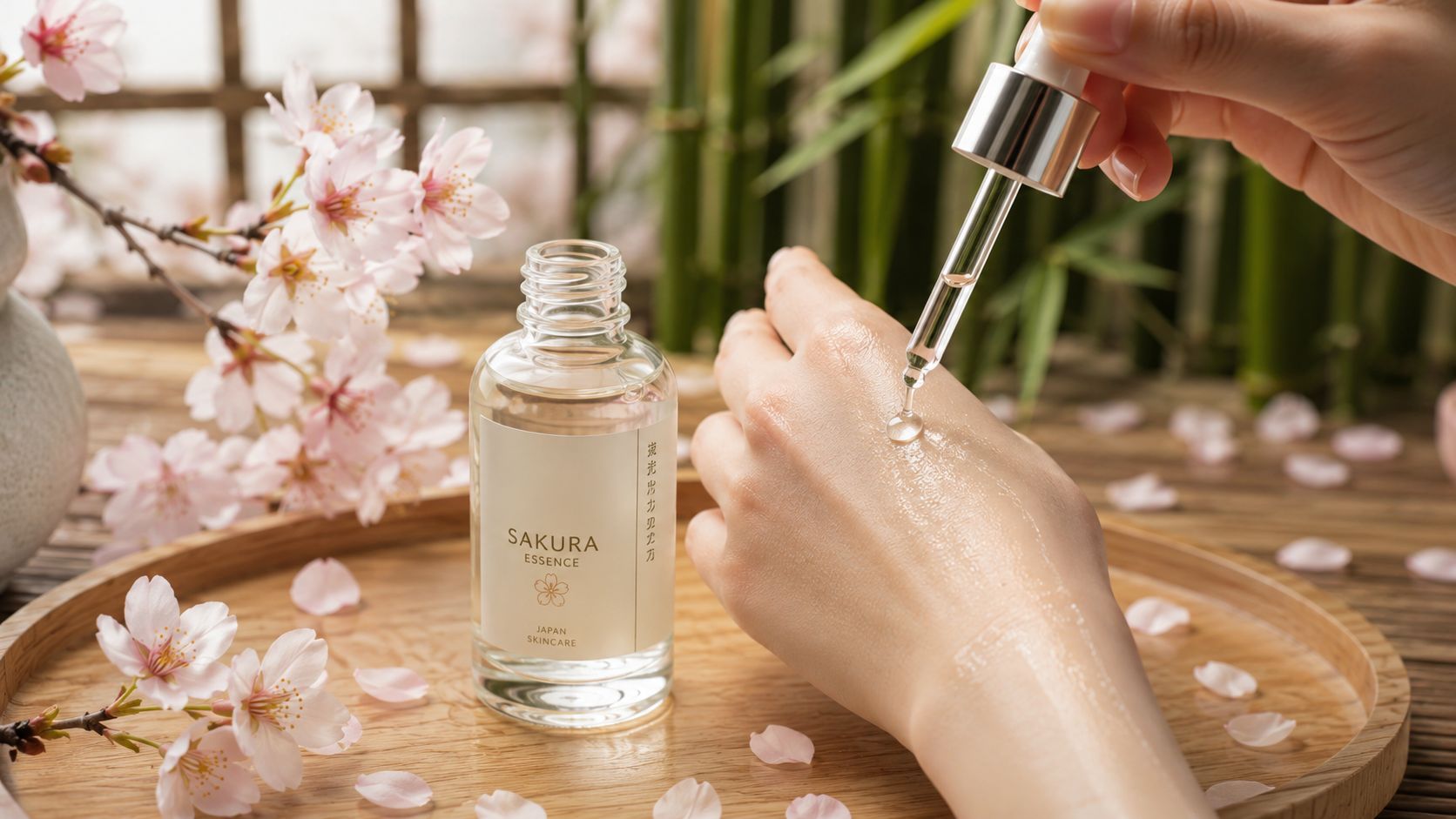
Hvis baderomshyllen din ser full ut, men huden fortsatt føles stram, matt eller merkelig uresponsiv, er du ikke alene. Mange kjøper en toner, et serum og en fuktighetskrem, stopper så opp foran essens-trinnet og lurer på om det bare er en ekstra flaske.
I japansk hudpleie er det vanligvis ikke ekstra. Det er trinnet som hjelper resten av rutinen til å gi mer mening.
En god essens myker opp overgangen mellom rens og behandling. Den tilfører vannbasert hydrering, støtter hudbarrieren og skaper en bedre overflate for produktene som kommer etter. Det er en av grunnene til at denne kategorien tiltrekker seg oppmerksomhet langt utenfor Japan. Det globale markedet for ansiktsessenser var verdsatt til 6 770,32 millioner USD i 2026 og forventes å nå 16 227,21 millioner USD innen 2035, noe som reflekterer en klar overgang mot lettvekts, høy-effektiv hydrering, spesielt i Japans hudpleiekultur, ifølge denne prognosen for ansiktsessensmarkedet.
Din guide til japanske hudpleie-essenser
Japansk hudpleie kan ofte føles forvirrende i starten fordi produktene kan se like ut. En toner kan virke vannaktig. En essens kan også virke vannaktig. Noen lotioner i Japan brukes som essenser, ikke som vestlig kroppslotion. Hvis du er ny innen J-beauty, kan bare navngivningen forvirre deg.
Den enkleste måten å forstå essens på er denne. Den er ikke der for å imponere deg med tyngde. Den er der for å gjøre huden din mer klar.

Japanske rutiner verdsetter ofte jevn hydrering og barrierepleie før de jakter på sterkere resultater. Derfor er essenser så viktige. De sitter midt i rutinen og hjelper huden til å føles fyldig, rolig og mottakelig.
Hvorfor essenser føles mindre mystiske i Japan
I Japan blir hudpleie ofte sett på som daglig vedlikehold i stedet for sporadisk redning. Ideen er enkel. Hold huden komfortabel, hydrert og balansert, så blir mange andre bekymringer lettere å håndtere.
Den filosofien er grunnen til at essens ikke behandles som en luksuriøs tillegg. Det er et praktisk støttetrinn.
En nyttig måte å tenke på en essens på er at den forbereder huden i stedet for å prøve å gjøre alt på egen hånd.
Hvis du fortsatt bygger grunnlaget ditt, er denne guiden til viktig informasjon om hudpleieprodukter en nyttig følgesvenn fordi den forklarer hvordan vanlige produkttyper passer inn i en rutine uten at prosessen føles klinisk.
Hva man bør være oppmerksom på
De som leter etter den beste essensen for ansiktet, søker vanligvis svar på fire spørsmål:
- Hva det gjør. Ikke markedsføringsspråk, men rollen det spiller.
- Hvordan japanske essencer skiller seg ut. De følger ikke alle samme stil som koreanske eller vestlige formuleringer.
- Hvilke ingredienser som passer huden din. Fuktighet, opplysning, beroligelse eller barriere-støtte krever forskjellige valg.
- Hvordan påføre den riktig. Rekkefølge og lagdeling betyr mer enn mange tror.
Mot slutten bør du kunne lese en essence-etikett med mer selvtillit og velge en som passer huden din i stedet for å følge en trend.
Hva er en ansiktsessence
En ansiktsessence er et lett behandlingstrinn som brukes etter rens og vanligvis før serum. Jobben er å tilføre fuktighet og hjelpe huden med å ta imot senere produkter mer komfortabelt.
Den enkleste analogien er en svamp. En tørr svamp tar ikke opp såpe godt. En lett fuktet svamp fungerer mye bedre. Huden oppfører seg på samme måte. En essence hjelper til med å skape den fuktede, fleksible tilstanden.
Hvorfor en essence ikke er det samme som en toner
Mange lesere sliter med denne forskjellen. Tonere, essencer og serum kan alle se tynne ut i flasken, men de spiller vanligvis ikke samme rolle.
Japanske essencer fokuserer ofte på fuktighetsgivende pleie først. Det betyr at de ikke bare fjerner rester eller leverer én smal aktiv ingrediens. De støtter hudens tilstand slik at resten av rutinen kan fungere bedre.
Mer enn 70 % av globale søk etter essence kommer fra brukere som spesifikt leter etter japansk hudpleie, men mange guider forklarer fortsatt ikke at japanske essencer ofte bruker hydrolysert protein og urea-baserte formuleringer designet for å støtte barriere-reparasjon uten å føles tunge, som nevnt i denne Vogue-oversikten over essence-søk og japanske formuleringer.
For en nærmere titt på denne forskjellen i en japansk hudpleiekontekst har Buy Me Japan en nyttig forklaring på forskjellen mellom toner og essence.
Toner vs Essence vs Serum ved et blikk
| Produkt | Hovedformål | Tekstur | Når det skal påføres |
|---|---|---|---|
| Toner | Friske opp huden og hjelpe til med å gjenopprette balansen etter rens | Vannaktig | Etter rens |
| Essence | Fukte, mykgjøre og forberede huden for behandlinger | Vannaktig til lett putete | Etter toner eller rett etter rens, før serum |
| Serum | Retter seg mot et mer spesifikt problem som matthet eller tørrhet | Lett til medium, ofte mer konsentrert | Etter essence |
Et serum har fortsatt en viktig plass. Hvis du vurderer hvordan en essence passer inn sammen med behandlingsprodukter, gir denne guiden til det beste anti-aldringsserumet for huden din en god forståelse av hva serum er designet for å gjøre annerledes.
Den japanske forskjellen i praksis
I mye av japansk hudpleie er essens en del av et lagdelt fuktighetssystem. Målet er ikke å drukne ansiktet i mange tilfeldige produkter. Målet er å bygge en rutine der hvert steg støtter det neste uten å overvelde huden.
Derfor føles den beste essensen for ansiktet ofte mindre dramatisk enn en sterk syre- eller vitaminbehandling. Den virker subtilt. Huden føles mindre stram, serumet fordeles jevnere, og fuktighetskremen låser bedre inn fuktigheten.
Hvis huden din ofte føles tørr og blank samtidig, kan en essens være det manglende steget i stedet for en rikere krem.
Nøkkelingredienser i japanske essenser
Ingredienslister kan virke skremmende, men du trenger ikke å pugge kjemi for å velge riktig. Du trenger bare å vite hvilken rolle en ingrediens spiller og om formelen virker kompatibel med huden din.
Japanske essenser er ofte bygget rundt noen klare mål. Gi grundig fuktighet. Støtte barrieren. Lysne forsiktig. Holde teksturen elegant nok for daglig bruk.
Fuktighetsgivere og barrierehjelpere
Fuktighetsgivende essenser baserer seg vanligvis på ingredienser som binder vann og hjelper huden å holde seg komfortabel.
Vanlige eksempler inkluderer:
- Hyaluronsyre. Hjelper med å tiltrekke og holde på vann i huden.
- Glyserin. En klassisk fuktbinder som støtter varig mykhet.
- Hydrolyserte proteiner. Ofte brukt i japanske formler for å støtte en jevnere og mer motstandsdyktig følelse.
- Urea. Kjent i japinsk hudpleie for å hjelpe med å myke opp ru hud samtidig som den støtter fuktighet.
Disse ingrediensene er viktige fordi godt hydrert hud pleier å føles roligere og se mer jevn ut. Det betyr ikke at alle formler passer for alle, men det forklarer hvorfor japanske essenser ofte føles umiddelbart nyttige.
Opplysende og toneutjevnende ingredienser
Hvis bekymringen din er gustenhet eller ujevn hudtone, vil du ha en essens som kombinerer fuktighet med opplysende støtte.
Den verifiserte veiledningen verdt å huske handler om balanse i formuleringen. Det optimale pH-området for ansiktsessenser er 4,5 til 6,5, som samsvarer med hudens naturlige surhet og hjelper ingrediensene å virke uten å forstyrre barrieren, ifølge denne pH-guiden for ansiktsessenser. Den samme veiledningen påpeker at niacinamid trenger en konsentrasjon på 2 til 5 % for synlige effekter.
Det betyr ikke at du må jage tall på hver flaske. Det betyr at en godt formulert essens skal føles hudvennlig, ikke hard.
Praktisk regel: Hvis en essens hevder å gi opplysende fordeler, men etterlater huden din sår hver dag, kan formelen være feil for hudbarrieren din.
Japanske opplysende rutiner kan også inkludere ingredienser som traneksamsyre eller niacinamid i bredere produktsystemer, spesielt når målet er å holde huden klar og jevn over tid.
Fermenterte og tradisjonelle japansk-inspirerte ingredienser
En av de mest interessante delene av J-beauty er hvor ofte tekstur og tradisjon møtes. Fermentert ris, soyabaserte ingredienser og andre pleiende ekstrakter er populære fordi de kan gi næring i formler som fortsatt føles lette og enkle å legge lagvis.
Hvis du er nysgjerrig på hvorfor fermenterte ingredienser dukker opp så ofte i japansk hudpleie, er denne artikkelen om fermenterte ingredienser i hudpleie verdt å lese.
Hvordan lese en ingrediensliste uten å overtenke det
En enkel tilnærming fungerer godt:
- For dehydrering: se etter hyaluronsyre, glyserin, urea og andre vannbindende ingredienser.
- For en sliten hudtone: se etter niacinamid eller andre ingredienser som støtter hudtonen i en mild base.
- For sensitiv hud: velg færre aktive ingredienser og mer fuktighet som styrker hudbarrieren.
- For lagdeling med sterkere behandlinger: velg balanserte formler som ikke føles sure eller uttørrende.
Den beste essensen for ansiktet er ikke alltid den med lengst ingrediensliste. Ofte er det den som gjør en eller to oppgaver godt, hver dag, uten å irritere huden din.
Hvordan velge riktig japansk essens
Du vasker ansiktet, påfører en lotion eller essens, og lurer på hvorfor en flaske føles beroligende og balansert mens en annen føles som et vannaktig serum i forkledning. Den forskjellen er ofte lettere å forstå når du vet hva japanske essenser prøver å gjøre.
Japanske essenser er vanligvis laget for rutine, ikke for show. Formelen er ment å passe inn i hverdagen, legges lagvis uten problemer, og holde huden komfortabel over tid. Koreanske essenser fremhever ofte nyheter, fermenteringshistorier eller veldig sprettende teksturer. Vestlige formler presser ofte sterkere aktive ingredienser eller serumlignende behandlingseffekter. Japanske essenser ligger gjerne midt imellom. De fokuserer først på hudtilstanden, og legger deretter til målrettet støtte på en måte som er lett å leve med.

En enkel måte å velge på er å starte med hvordan huden din føles ved middagstid eller etter rens. Stram hud trenger vanligvis vann. Ujevn hudtone trenger ofte en mild opplysende tilnærming du kan bruke jevnlig. Hud som rødmer eller svir, har ofte det bedre med færre aktive ingredienser.
For hydrering
Fuktighet er det enkleste stedet å begynne, spesielt hvis du er ny innen japansk hudpleie. Mange japanske essenser i denne kategorien er designet som et jevnt glass vann for huden. De handler mindre om dramatisk behandling og mer om å holde overflaten smidig, slik at resten av rutinen fungerer bedre.
Et klassisk eksempel er Hada Labo Gokujyun Premium Lotion, som mange internasjonale kunder bruker som et essens-steg på grunn av sin rike, vannbindende følelse. På Buy Me Japan kan du finne Hada Labo-produkter og sammenligne teksturer i hele serien.
Hvis du fortsatt er usikker på hvordan en essens skiller seg fra et serum, hjelper denne guiden om hva hyaluronsyre-serum er med å klargjøre hvor hvert produkt passer inn.
Se etter:
- Flere fuktbindere hvis huden din mister fukt raskt
- En tekstur du vil like å legge lag på lag med morgen og kveld
- Lavparfymerte eller parfymefrie formler hvis huden din er reaktiv
For lysning
Japansk lysnende pleie tar vanligvis en langsommere, jevnere tilnærming enn eksfolierende systemer som sikter mot rask fornyelse. Målet er daglig klarhet og en jevn hudtone, med en formel som fortsatt føles elegant.
Transino er et merke mange kunder legger merke til av denne grunn. Hvis du ser på alternativer, er Transino-kolleksjonen et godt sted å sammenligne produkter designet rundt dette behovet.
Du kan også utforske Shiseido AQUALABEL og Kose Sekkisei hvis du foretrekker en mer klassisk japansk hudpleiestil. Disse linjene velges ofte av folk som ønsker fukt først, med lysnende støtte integrert i rutinen i stedet for påtvunget.
For anti-aldringsstøtte
For fine linjer eller tap av spenst, start med å spørre om huden din er tørr, dehydrert eller begge deler. Mange jakter på oppstrammende produkter når huden først trenger bedre daglig fuktighet. En godt valgt essens kan myke opp linjenes utseende ved å forbedre vannbalansen og overflatestrukturen.
Shiseido Elixir viser denne filosofien tydelig. Du kan bla gjennom Shiseido Elixir-produkter hvis du ønsker formler fokusert på fasthet, fuktighet og en polert hudfølelse.
For et lettere alternativ med en raffinert finish, ser noen kunder også på Kanebo DEW.
For beroligende og sensitiv hud
Sensitiv hud responderer ofte best på måtehold. I japansk hudpleie betyr det vanligvis færre aggressive ingredienser, renere lagdeling og teksturer som reduserer friksjon i stedet for å tilføre mer stimulering.
Merker å følge med på inkluderer:
- Shiseido d Program, kjent for pleie rettet mot sensitiv hud. Bla gjennom Shiseido d Program.
- Minon, ofte valgt for skånsom fuktighet. Se Minon-kolleksjonen.
- Chifure, som mange kunder setter pris på for sine enkle formler. Utforsk Chifure hudpleie.
Et enkelt beslutningsfilter
Hvis to flasker ser like ut, bruk dette enkle filteret:
- Hva ber huden min oftest om? Vann, komfort eller tone-støtte?
- Kan jeg se for meg å bruke denne to ganger om dagen uten å nøle?
- Bruker jeg allerede sterke aktive ingredienser andre steder i rutinen min?
- Foretrekker jeg en veldig vannaktig finish eller en litt mer dempet en?
Det siste spørsmålet er viktigere enn det ser ut til. Japanske essenser er formulert med teksturdisiplin. En flaske som føles behagelig i hånden og forsvinner pent under neste steg, er ofte den du vil fortsette å bruke. Og i japansk hudpleie betyr konsistens som regel mer enn å jakte på den mest kompliserte formelen.
Slik påfører du essensen på japansk vis
Påføring påvirker resultatene mer enn mange tror. En essens blir ikke bare påført og glemt. I japansk hudpleie er metoden skånsom og gjennomtenkt.

Japanske hudpleierutiner beskrives ofte gjennom fire kjerne steg: rense, polere, fylle og nære, der essens fungerer som det viktige fylle-steget som tilfører fuktighet og forbereder huden på det som kommer, som beskrevet i denne oversikten over japanske hudpleierutiner.
Metoden med håndpress
Mange japanske brukere påfører essens med hendene i stedet for en bomullspad. Det betyr ikke at bomull er feil. Det betyr bare at hendene ofte bruker mindre produkt og gir deg bedre kontroll.
Prøv denne rekkefølgen:
- Rens først. Huden bør være ren og litt fuktig eller nylig tørket.
- Ta ut en liten mengde i håndflaten.
- Press forsiktig over kinn, panne, nese og hake.
- Klapp lett til huden føles jevnt dekket.
- Ikke gni hardt. Friksjon kan motvirke den beroligende effekten du ønsker.
Å presse en essens inn i huden fungerer vanligvis bedre enn å tørke den raskt rundt.
Hvis du bygger en full dagsrutine rundt dette steget, gir Buy Me Japans guide til morgenrutine for hudpleie en nyttig rekkefølge for produktene.
Hvor essens passer inn i en ekte rutine
En enkel japansk stil på rekkefølgen ser slik ut:
- Rens med renseprodukt
- Poler med eksfoliering når det trengs, ikke hver dag
- Fyll ut med essens
- Nær huden med serum, emulsjon eller fuktighetskrem
Folk gjør ofte ting mer komplisert enn nødvendig når det gjelder essenser. Hvis du bruker essens, trenger du ikke vente lenge før neste produkt. La det trekke inn kort, og gå videre når huden føles fuktig, ikke våt.
For en visuell demonstrasjon av skånsom påføring og lagdeling er denne rutinevideoen nyttig:
Lagvis påføring med aktive ingredienser uten å irritere huden
Det vanlige spørsmålet er ikke om essens skal på før serum. Det gjør det vanligvis. Det vanskeligere spørsmålet er hva som skjer når vitamin C, eksfolierende syrer eller retinoid-lignende produkter også er med i rutinen.
Hold det enkelt:
- Hvis det aktive produktet ditt er sterkt, bruk en rolig, fuktighetsgivende essens under eller rundt det i stedet for å stable mange behandlingslag.
- Hvis huden din er sensitiv, ikke kombiner for mange intense produkter i én økt.
- Hvis essensen din allerede gjør mye, kan serumet være enklere.
Den tryggeste rutinen er ofte den minst overfylte. Essens skal få huden til å føles bedre forberedt, ikke overbelastet.
Topp japanske essensmerker du kan stole på
Merkevarens omdømme betyr mer i hudpleie enn mange innrømmer. En vakker flaske betyr lite hvis formelen føles inkonsekvent, hard eller dårlig laget. Japansk hudpleie skaper tillit fordi mange merker bygger sin identitet rundt langvarig daglig bruk, ikke kortvarig nyhet.

Shiseido og deres behandlingfokuserte linjer
Shiseido har en uvanlig sterk posisjon innen japansk skjønnhet. Det er ikke bare bredt anerkjent i utlandet, men har også en sterk posisjon hjemme. Shiseido Co Ltd er en av de fem dominerende aktørene i det japanske markedet for skjønnhets- og personlig pleieprodukter, ifølge denne rapporten om det japanske skjønnhetsmarkedet.
Det hjelper med å forklare hvorfor linjer som Shiseido Elixir og Shiseido d Program tiltrekker seg svært forskjellige brukere, samtidig som de føles forankret i nøye formulering. Elixir fokuserer på fuktighet og fasthet. d Program henvender seg mer direkte til sensitiv hud.
Hvis du ønsker en bredere oversikt over både tradisjonelle og nyere merker, har Buy Me Japan også en nyttig guide til japanske hudpleiemerker du bør kjenne til i 2025.
Hada Labo og tilnærmingen med fokus på hydrering
Hada Labo har blitt en global favoritt fordi det uttrykker en veldig japansk idé tydelig. Fokus på hydrering. Fjern det som ikke trengs. Hold teksturen enkel å bruke hver dag.
Derfor ender mange som spør etter den beste essensen for ansiktet opp med å like Hada Labo, selv om de opprinnelig var ute etter noe dyrere. Formelstilen er praktisk og barrierebevisst.
Kose, Minon, Chifure og andre stabile aktører
Ikke alle ønsker luksusposisjonering. Mange kunder vil ha pålitelig hudpleie fra merker som er kjente i Japan.
Noen få navn verdt å huske:
- Kose Sekkisei for en klassisk lysnende identitet
- Minon for myk, beroligende hydrering
- Chifure for enkle formler og tilgjengelighet
- Kanebo DEW for elegante fuktighetsgivende teksturer
Tilliten til japansk hudpleie kommer ofte fra konsistens. Produktene er laget for å passe ekte daglige rutiner, ikke bare for å skille seg ut på en trendhylle.
For internasjonale kjøpere er ekthet viktig fordi japanske innenlandske formler og navnekonvensjoner kan være forvirrende når produkter sirkulerer gjennom mange forhandlere. Å kjøpe fra en Japan-fokusert forhandler bidrar til å redusere denne usikkerheten.
Ofte stilte spørsmål om ansiktsessenser
Kan jeg bruke en ansiktsessens hver dag?
Ja, de fleste essenser er laget for daglig bruk, ofte morgen og kveld. Hvis formelen er mild og fuktighetsgivende, er daglig bruk vanligvis poenget. Hvis huden stikker eller blir rød, reduser frekvensen og sjekk om en annen aktiv ingrediens i rutinen din er problemet.
Kan jeg bruke en essens i stedet for en fuktighetskrem?
Vanligvis ikke. En essens tilfører fuktighet, men erstatter vanligvis ikke den forseglende rollen til en fuktighetskrem eller emulsjon. Hvis huden din er veldig fet, kan du noen ganger føle deg komfortabel med bare en essens i varmt vær, men det anbefales vanligvis å forsegle det med et siste fuktighetsgivende trinn.
Hvor lenge bør jeg vente før jeg påfører serum etter essens?
Du trenger ikke å vente lenge. Når essensen har trukket inn og huden føles lett hydrert i stedet for våt, kan du påføre serum. Målet er jevn lagdeling, ikke lange pauser.
Er en japansk essens bedre enn en koreansk eller vestlig?
Ikke automatisk. Det beste valget er det som passer din hud og rutine. Japanske essenser skiller seg ofte ut fordi de fokuserer sterkt på elegant hydrering, barrierebeskyttelse og daglig brukervennlighet. Hvis det er det huden din trenger, kan de være et utmerket valg.
Hvis du er klar til å velge en japansk essens med mer selvtillit, er Buy Me Japan et praktisk sted å bla gjennom autentisk hudpleie sendt direkte fra Japan, inkludert pålitelige merker som Hada Labo, Shiseido Elixir, Shiseido d Program, Transino, Minon, Chifure og Kose Sekkisei.

Dele:
Elektrisk vannkoker japansk: Din kjøperguide for 2026
Aquarius japansk drikk: Smaker og hvor du kan kjøpe 2026