


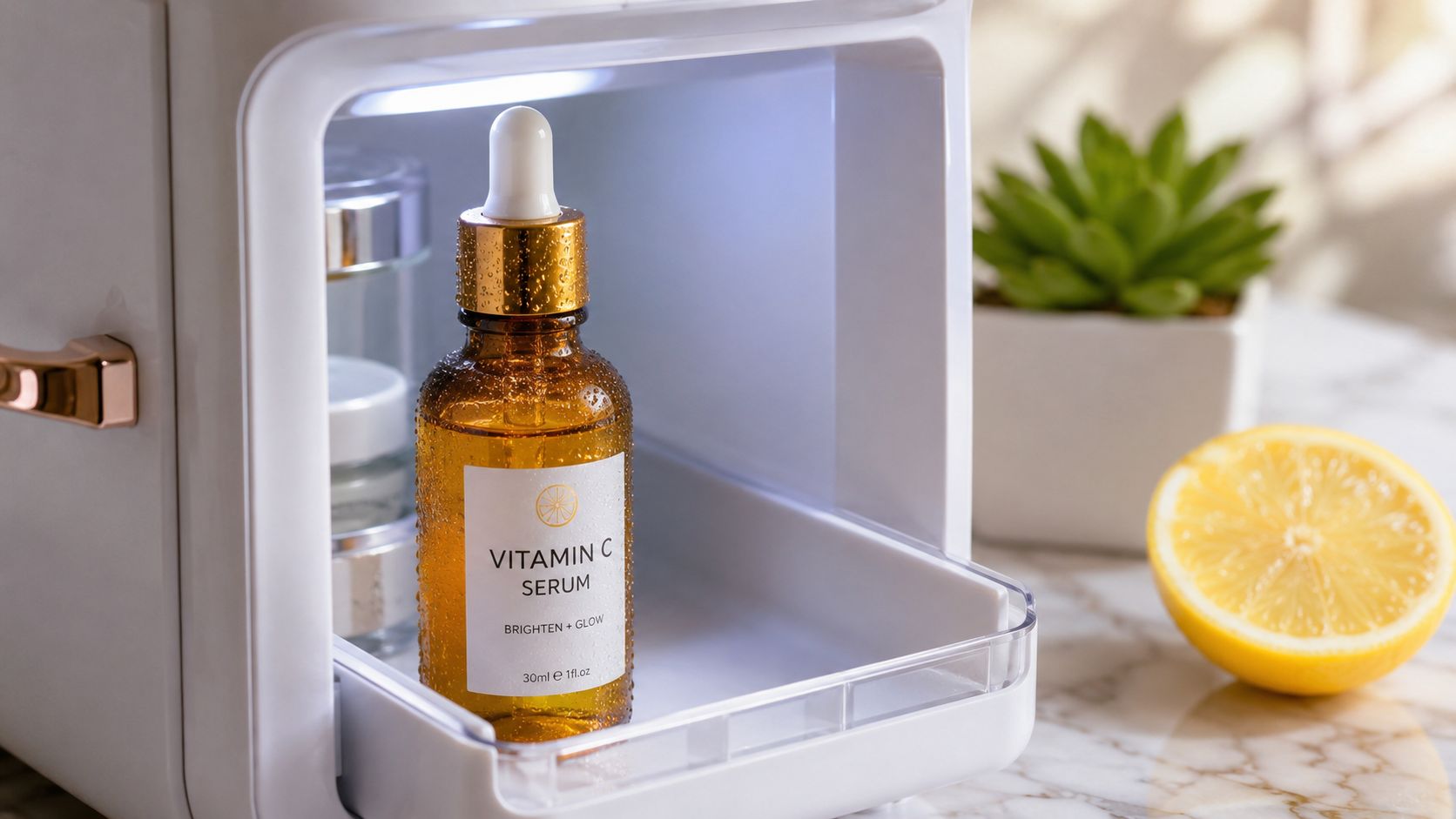
You buy a beautiful Japanese vitamin C serum, open it a few times, and then one morning the liquid looks darker than you remember. It's a common moment of confusion. Is it still safe? Is it still effective? Did you store it the wrong way?
If you've been searching for a clear answer on how to store Vitamin C serum, the good news is that the basics are simple once you understand what the formula is reacting to. The better news is that many high-quality Japanese formulas are designed with smart packaging and careful formulation, so a few good habits can go a long way.
This guide breaks it down in plain English. You'll learn why vitamin C changes so easily, where to keep it, when the fridge helps, how to spot oxidation, and how to protect premium J-beauty serums so they stay useful for as long as possible.
Why Your Vitamin C Serum Needs Special Care
Vitamin C is one of those ingredients that can do impressive work in a routine, but it's also delicate. It's similar to a sliced apple. Leave that apple exposed to air and light, and it starts to turn brown. Vitamin C serum behaves in a similar way. It reacts to its environment, and that reaction slowly weakens the formula.

That change is called oxidation. In practical terms, it means the ingredient is breaking down after contact with air, heat, and light. This is why a serum that looked clear or pale at first can later look yellow, orange, or brown.
According to Vichy's guide to storing vitamin C serum, vitamin C skincare products typically remain effective for 3 to 6 months after opening, provided they are stored in a cool, dark environment. The same source explains that oxidation causes the serum to shift from clear or straw-hued to yellow, brown, or orange, which signals a severe loss of antioxidant potential and efficacy.
What oxidation looks like in real life
A fresh serum usually looks light and clean in color. As oxidation progresses, the color deepens. That doesn't happen because the product is “settling.” It happens because the active ingredient is being altered.
Japanese vitamin C products often earn loyal followings because they're designed with thoughtful textures and packaging. But even a well-made serum isn't immune if it sits on a sunny shelf or stays half-capped after each use.
Practical rule: If your vitamin C serum is exposed to light, warmth, and air every day, it won't behave like a fresh bottle for long.
Why readers often get confused
Some people assume a darker serum is still fine if it smells normal. Others think all vitamin C products are equally stable. Neither assumption is reliable. Different formulas age differently, and vitamin C is one of the ingredients where storage habits matter almost as much as the formula itself.
If you want a basic routine refresher before focusing on storage, this guide on how to use vitamin C serum is a helpful next read.
The key idea is simple. When you protect the serum from oxidation, you protect the reason you bought it in the first place.
The Golden Rules for Storing Vitamin C
If you want one easy framework, remember vitamin C's three enemies: light, air, and heat. Good storage means reducing all three every single day, not just when the weather gets hot.

The temperature rule is straightforward. Phyto-C's storage guidance says vitamin C serum should be stored below 77°F (25°C) in a cool, dark place such as a refrigerator, medicine cabinet, or drawer, while avoiding bathrooms, windowsills, or surfaces exposed to direct sunlight.
The best places to keep it
A bedroom drawer works well. So does a dry cabinet away from radiators, windows, and steam. If you have a skincare fridge, that can be a smart option too.
The main point isn't to find a fancy storage spot. It's to find a stable one. Vitamin C does better in a boring environment than in a pretty one.
The worst places to keep it
A bathroom often seems convenient, but it can be a poor choice. Steam, warmth, and repeated temperature swings can make a delicate formula age faster. A sunny vanity is another bad idea, even if the bottle itself looks elegant on display.
Here's a quick comparison:
| Storage spot | Good choice | Why |
|---|---|---|
| Bedroom drawer | Yes | Dark, cool, low disturbance |
| Dry medicine cabinet | Usually | Works if it stays cool and not steamy |
| Refrigerator | Yes | Helps limit heat exposure |
| Bathroom shelf | No | Humidity and warmth are common |
| Windowsill | No | Direct light and heat speed breakdown |
Daily habits matter more than people think
Storage isn't only about location. It's also about what happens in the ten seconds after you apply the serum.
• Close it immediately: Every extra moment with the cap off gives air more access to the formula.
• Keep the opening clean: Residue around the neck of the bottle can make the product messier and increase unnecessary exposure during the next use.
• Put it back right away: Don't leave it sitting out while you finish the rest of your routine.
If your skin is reactive and you already think carefully about product handling, this article on Japanese skincare for sensitive skin pairs well with these storage basics.
A cool drawer beats a stylish shelf every time.
The Refrigeration Question Answered
This is the storage question people ask most. Do you need to refrigerate vitamin C serum, or is that just skincare folklore?
For many vitamin C formulas, refrigeration is a smart move. For pure, water-based formulations, there's direct support for it. Paula's Choice explains that a 2021 scientific study confirmed these formulas retain both their stability and full potency when stored at refrigerated temperatures, and that lower temperatures, typically 35–40°F, slow oxidation and can extend usable lifespan by up to 50% compared with counter storage.
When the fridge helps most
Refrigeration matters most if your home runs warm, if you live in a humid climate, or if you're using a water-based vitamin C serum that oxidizes easily. In those conditions, the fridge acts like a shield against one of vitamin C's biggest problems: heat-driven breakdown.
It also helps if you don't use the product quickly. If you rotate several serums, chilling vitamin C can buy you more time before oxidation catches up.
When room temperature can still work
Not everyone needs a fridge. If your home stays cool and dry, and your serum lives in a dark drawer or cabinet, room-temperature storage may still be reasonable. Some people also prefer not to refrigerate if they use their serum every morning and finish bottles quickly.
That said, the fridge is often the safer choice because it removes guesswork. You don't need perfect air conditioning or a perfectly dry cabinet. You just need a cold, consistent place.
A simple decision guide
• Choose refrigeration if: your climate is hot, your room gets warm, or your serum is a pure water-based formula.
• Choose a cool cabinet if: your home stays comfortably cool and dry, and the product is protected from light.
• Avoid indecision: if you're unsure, refrigeration is usually the easier way to protect potency.
For readers building a full routine around active ingredients, this explainer on the difference between toner and essence can help you place vitamin C more sensibly in the bigger picture.
Cold storage doesn't make vitamin C magical. It slows the reaction that makes it weaker.
How to Know When Your Serum Has Turned
Even if you store it well, vitamin C serum won't last forever. The most useful skill you can develop is learning how to spot the moment a bottle has moved from “still good” to “past its best.”

Color is the first clue. Fresh formulas are often clear or pale straw in tone. As oxidation progresses, the liquid becomes more yellow, then deeper orange or brown. A dramatic darkening is your clearest warning sign.
Check color, smell, and feel
Don't stop at color alone. Smell matters too. Wirecutter's vitamin C storage advice notes that serums stored in humid bathrooms can degrade 3–5 times faster, and this can lead to sour or metallic odors and skin irritation. The same source says that tight resealing and clean handling protocols increase the serum's functional lifespan by 40–50%.
That means a bottle can tell you a lot before you put it on your face. If it smells sharp, metallic, or oddly sour, that's a sign to pause. If the texture separates or seems noticeably off, be cautious there too.
If the serum looks much darker than when you opened it, trust your eyes.
A simple way to judge it
Use this quick reference:
• Clear to pale straw: usually consistent with a fresher product
• Noticeably yellow: pay attention and monitor closely
• Orange or brown: strong sign the serum has oxidized significantly
• Sour or metallic smell: another warning sign that the formula has degraded
A quick visual explanation can help if you're unsure what “oxidized” really looks like in practice.
The other place people get tripped up is assuming all irritation comes from “strong actives.” Sometimes the formula itself has aged badly. That's why storage and inspection go together.
Pro Tips for Extending Serum Efficacy
Once you've covered the basics, a few smarter habits can help you get more out of every bottle. This matters even more with high-quality Japanese skincare, where formulation elegance and packaging design often work hand in hand.

One useful benchmark comes from WikiHow's vitamin C storage guide, which says that once opened, vitamin C serum begins degrading after approximately 3 months at room temperature and up to 5 months when refrigerated, though exact duration varies by brand. The same guidance notes that sealing the container tightly immediately after use significantly slows oxidation.
Choose packaging that works with you
Not all vitamin C packaging offers the same protection. Dropper bottles can be practical, but they repeatedly expose the product to air. Opaque tubes and airtight pumps usually offer better day-to-day protection because they reduce both light exposure and repeated contact with oxygen.
That's one reason many J-beauty fans like thoughtfully packed formulas such as Melano CC, which is known for tube-style delivery rather than a wide-open jar format. Packaging won't make a weak formula strong, but it can help a strong formula stay usable longer.
Handle the product like it's active, because it is
A few simple habits make a real difference:
• Don't let the dropper touch skin: This helps avoid transferring oil, moisture, or residue back into the bottle.
• Use clean, dry hands: Water and product residue around the opening can make storage less hygienic.
• Keep the bottle out only briefly: Apply, close, and return it to its storage spot.
• Open one bottle at a time: If you're testing several serums, you increase the chance that one sits unused long enough to degrade.
Match your buying habits to your usage habits
People often buy a large bottle because it feels like better value. But if you use vitamin C slowly, a smaller bottle can be the better choice because you're more likely to finish it while it's still in good condition.
This matters if your goal is brightening. Readers exploring broader strategies for treating varied skin discoloration may find that ingredient choice and consistency both matter, but consistency only helps if the serum is still in good shape.
For routines that combine hydration with actives, this guide to what hyaluronic acid serum is is useful for deciding what to layer alongside vitamin C.
Storage insight: The best serum isn't the one with the fanciest bottle. It's the one you can keep stable and finish in time.
Protecting Your Skincare Investment
Vitamin C rewards careful users. If you keep it cool, dark, and tightly sealed, you give the formula its best chance to stay effective instead of fading early in the bottle.
That matters even more with premium Japanese skincare. J-beauty products are often purchased for their elegant textures, refined formulation standards, and dependable quality. Good storage protects that quality after the bottle reaches your shelf.
If you're also working through stubborn tone concerns and want professional context beyond home care, a clinic resource like Skin Clinic Maidenhead can add useful perspective on skin-focused treatment options. At the day-to-day level, though, your most important job is simple: keep the serum away from heat, humidity, and light, and pay attention when its color and smell begin to change.
For a related read on uneven tone, how to fade dark spots is a logical next step.
A well-stored serum gives you the best chance of getting the performance you expected when you opened it.
If you're ready to shop authentic Japanese vitamin C serums and other J-beauty essentials, explore Buy Me Japan. It's a trusted way to find Japanese skincare shipped directly from Japan, with a curated selection that helps you choose products worth storing properly from day one.


共有する:
What Is Hyaluronic Acid Serum: Expert Guide 2026
Maruchan vs Nissin Ramen: Which Is Best for You?