

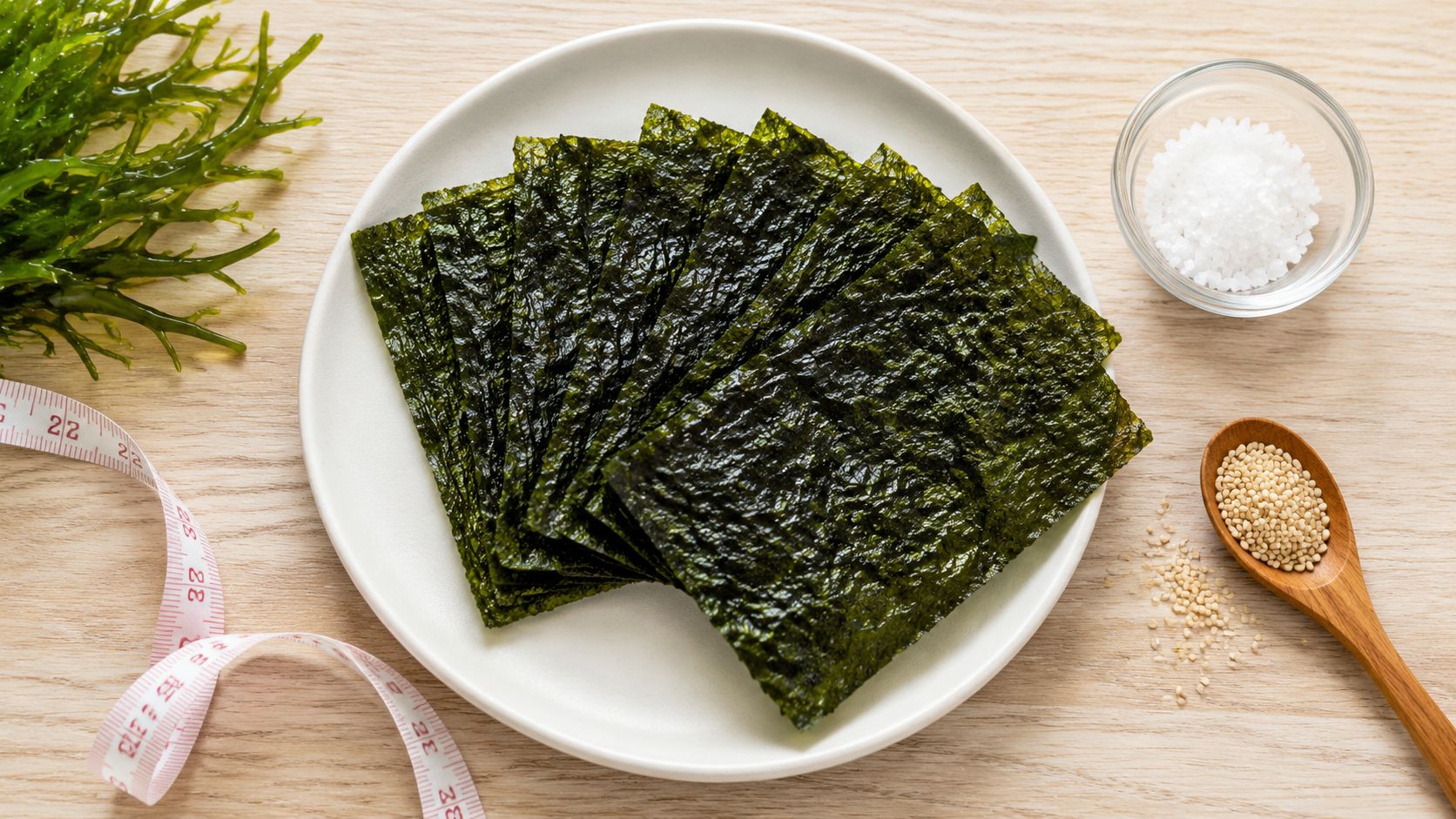
You're probably here because you want a snack that feels satisfying, not flimsy. Something salty and crisp for that mid-afternoon slump, but without the heaviness that often comes with a bag of potato chips.
Japanese seaweed snacks fit that moment unusually well. In Japan, roasted seaweed snacks made from nori or other edible sea vegetables are part convenience food, part pantry staple, and part lesson in how simple ingredients can deliver a lot of flavor. The appeal isn't just that they're light. It's that good ones are savory, clean-tasting, and easy to work into everyday eating.
This guide breaks down seaweed snacks nutrition in plain language. You'll see how they compare with potato chips, why they can support a balanced diet, where shoppers get tripped up by iodine and sodium, and how to read labels so you can choose authentic Japanese products with more confidence. If you also enjoy broader plant-based Japanese snack options, this guide to vegetarian Japanese snacks is a useful companion.
The Search for the Perfect Healthy Snack
What's craved isn't “healthy.” It's crunchy, salty, and convenient.
That's why seaweed snacks keep winning people over. They answer the same urge that sends someone toward chips, but they do it with a very different nutritional profile and a very different style of flavor. Japanese versions, especially, tend to focus on roasted seaweed itself rather than burying it under heavy seasoning.

In a Japanese kitchen, roasted seaweed isn't only a snack. People crumble it over rice, tuck it into lunchboxes, or use it to add a quick hit of umami, that savory depth that makes simple food taste complete. That everyday familiarity matters. It means the product was shaped by a food culture that values clean taste, texture, and restraint.
Practical rule: If a seaweed snack tastes like seasoning first and seaweed second, it's usually not the best place to start.
There's also a reason seaweed feels so different from standard snack food. A thin sheet can be crisp and delicate, yet still feel substantial because the flavor is concentrated. You don't need a huge portion to feel like you ate something real.
That combination of convenience, taste, and nutritional value is why so many health-conscious shoppers start looking beyond local supermarket versions and toward products made for the Japanese market.
A Detailed Look at Seaweed Snacks Nutrition
Seaweed snacks look almost weightless, so people often assume they're nutritionally minor. They aren't. Their value comes from density, not bulk.
One reason they stand out is the calorie difference compared with chips. According to NutriScan's seaweed chips nutrition breakdown, seaweed snacks provide approximately 80 calories per 20g serving, compared with over 150 calories for the same amount of potato chips. The same source notes that dried seaweed chips contain 400 calories per 100g, while potato chips contain 536 calories per 100g, making seaweed snacks 25% fewer in calories and 43% lower in fat content.
Why the numbers matter
Calories alone don't explain why seaweed can feel satisfying. The bigger story is the mix of fiber, low fat, and strong savory taste.
A research review on seaweed snacks reports that a 100g dry-weight seaweed snack using Ulva species contains 19.18g protein, 44.64g fiber, 0.26g fat, and 9.48g carbohydrates in this PMC article on seaweed as a functional food. That's why seaweed is often described as a high-protein, ultra-high-fiber, low-fat food.
Fiber is where many readers get confused. A thin, crispy snack doesn't seem like it should contain much fiber. But seaweed's structure is rich in polysaccharides, including compounds such as agar, alginate, and carrageenan. The same review explains that these fibers bind water and slow digestion, which can support satiety and act as a prebiotic for gut health.
Seaweed snacks vs potato chips
| Nutrient | Seaweed Snacks | Potato Chips |
|---|---|---|
| Calories per 20g serving | Approximately 80 | Over 150 |
| Calories per 100g | 400 | 536 |
| Fat content | 43% lower than potato chips | Higher |
| Eating experience | Crisp, light, savory | Crisp, dense, oily |
The comparison is useful because it answers a practical question. If you're replacing one salty snack with another, are you improving anything? In this case, yes. You're often getting fewer calories, less fat, and a food that may help you feel full sooner.
Seaweed snacks aren't “magic diet food.” They're simply a smarter crunchy option when you want taste without the usual oil-heavy profile.
What seaweed adds beyond macros
Seaweed also brings minerals that potato chips usually don't. NutriScan notes that a standard 20g serving of nori-based chips provides roughly 45mcg of iodine, which is 30% of the 150mcg daily recommendation for adults, while also offering micronutrients such as iron, vitamin B12, and antioxidants in a way typical processed starchy snacks usually don't.
That's the heart of seaweed snacks nutrition. They don't just remove some of the drawbacks of common snack foods. They add nutrients that many snack categories barely offer at all.
The Health Benefits of Japanese Seaweed Snacks
When people call seaweed a superfood, the word can sound exaggerated. In this case, the label makes sense because seaweed packs meaningful nutrition into a small serving.
A single 15g serving of seaweed provides 45 calories and 5 grams of protein, along with 56% of the daily value for copper, 21% for iron, and 17% for magnesium, according to Healthline's review of seaweed nutrition. That same serving also contributes folate, riboflavin, and thiamin, which support normal metabolic function.
Why it helps with appetite control
A good snack should do more than keep your hands busy. It should bridge you to the next meal without leaving you feeling overfed.
Seaweed does that in two ways. First, it's relatively low in calories for the amount of flavor it delivers. Second, its fiber content helps food move through digestion more slowly, which can help with fullness. That's one reason many people find it easier to stop after a reasonable portion than they do with standard chips.
For readers who like other Japanese functional foods, there's a similar interest in simple, nutrient-dense ingredients behind aojiru green juice, which is another example of Japan's food culture leaning toward concentrated nutrition.
Micronutrients that matter
Seaweed isn't just useful because it's light. It can also fill nutrient gaps, especially for people who eat little or no seafood, dairy, or meat.
A few standouts from the Healthline profile:
- Copper: Important for energy production and iron metabolism
- Iron: Useful for people who want more plant-based mineral sources
- Magnesium: Supports many routine body functions
- Protein: Helpful in a snack category where protein is often minimal
Some seaweed also contains long-chain omega-3 fatty acids and antioxidants, which add to its nutritional appeal. Those details matter because they shift seaweed out of the “better than junk food” category and into “worth eating on its own.”
A well-made seaweed snack isn't only a substitute. It's a food with its own nutritional strengths.
That's especially true in Japanese snack culture, where seaweed is treated as an ingredient with identity, not just a novelty wrapper around added flavor.
Navigating Potential Risks Iodine and Sodium
You grab a pack of seaweed snacks because it looks lighter than chips, then notice the back label says one package contains multiple servings. That is the moment seaweed changes from a simple “healthy snack” into a food that rewards careful reading.

Why iodine can be both helpful and excessive
Seaweed is one of the richest natural sources of iodine, the mineral your thyroid uses to make hormones. The catch is that seaweed species do not behave the same way. Nori is often much milder, while kelp and some mixed-seaweed products can deliver far more iodine than casual snackers expect.
According to Healthline's article on seaweed benefits and iodine content, iodine levels in seaweed vary dramatically by type, and even a modest serving of dried nori can contribute a meaningful amount. That helps explain why authentic Japanese seaweed snacks often feel easier to fit into a regular diet. Many are built around nori, lighter seasoning, and smaller, clearly defined portions, while some Westernized products mix species or add stronger flavor systems that make it easier to overeat without noticing what you are getting.
A useful comparison is tea versus espresso. Both come from the same broad category of drink, but the intensity is different. Seaweed works the same way. “Seaweed” on the front of the package does not tell you enough.
What to check before you buy
Read the back panel in this order:
- Seaweed type: Look for nori if you want a more predictable everyday snack.
- Serving size: A small tray or pouch may contain more than one serving.
- Sodium per serving: Seasoned seaweed can climb fast, especially barbecue, teriyaki, or spicy versions.
- Ingredients: Short lists are easier to judge. Seaweed, oil, salt, and a few seasonings are simpler to evaluate than long flavor blends.
- Country and maker information: Products made for the Japanese market often give clearer clues about the seaweed used and tend to treat the seaweed itself as the main event, not as a base for heavy seasoning.
Sodium needs the same kind of attention. Seaweed starts out light, but seasoning can change the picture quickly. A lightly salted Japanese roasted nori snack and a heavily flavored seaweed chip-style product may look similar on the shelf while eating very differently in your daily diet. If sodium is already something you monitor, using AI-powered low sodium meal planning can help you place a salty snack in the context of the full day instead of guessing.
Safety is not only about iodine and salt. Product quality matters too. The U.S. Food and Drug Administration discusses chemical contaminants, including arsenic, cadmium, lead, and mercury, in seaweed and explains why source waters and testing matter. That is another practical reason to buy carefully from reputable Japanese producers rather than treating all seaweed snacks as interchangeable.
If seaweed is part of a broader Japanese pantry routine in your home, this guide on whether miso paste is gluten free can help you read labels with the same level of care.
Here's a quick visual refresher on label awareness and smarter snack choices:
Buy seaweed snacks the way you buy good olive oil. The ingredient itself should carry the experience, and the label should tell you exactly what you need to know.
A sensible way to enjoy it
Seaweed snacks fit best as a concentrated food, not an endless handful food.
Choose clearly labeled nori-based products when possible. Keep an eye on portion size. Rotate brands and seaweed types instead of eating the same product every day. If you have thyroid disease, are pregnant, or have been told to watch iodine intake, follow that medical advice first.
That is where authentic Japanese seaweed snacks often stand out. They usually make moderation easier because the flavor is cleaner, the portions are tidier, and the product is built to showcase seaweed rather than overwhelm it.
How to Choose Authentic Japanese Seaweed Snacks
You're standing in front of two seaweed snack packs. One promises bold flavor, has a long ingredient list, and feels more like a chip. The other looks plain by comparison, but the label is short and the seaweed is clearly the star. That small shopping moment usually decides whether you get a clean, savory Japanese-style snack or a heavily processed version that happens to use seaweed.
Authentic Japanese seaweed snacks are usually built with restraint. That matters because seaweed is a concentrated ingredient. A lighter hand with oil and seasoning makes it easier to taste quality, control sodium, and keep portions sensible. Westernized versions often push in the opposite direction. They can be thicker, sweeter, saltier, or more aggressively flavored, which makes label reading much more important.

Signs of a better product
Start with the package, then confirm with your senses once you open it.
- Seaweed type: Nori is often the easiest place to start because its iodine level is generally lower than kelp-heavy products, and the taste is more familiar to many snack buyers.
- Ingredient list: Short is usually better. Look for seaweed, oil, salt, and simple seasonings you recognize. If sugar, flavor powders, and additives crowd the label, the product is probably designed more like a seasoned snack chip.
- Sodium per serving: Compare brands side by side. A small pack can still carry a meaningful amount of sodium, especially if the serving size is unrealistically tiny.
- Iodine clues: Some labels list the seaweed species clearly, which helps. Kelp and kombu products tend to be more concentrated in iodine than nori-based snacks.
- Country and maker: Products made for the Japanese domestic market often give clearer signals about style and quality. You may see simpler seasoning profiles, tidier portions, and more attention to the seaweed itself.
Then check the food itself. Good roasted seaweed should look deep green, smell fresh and toasty, and snap cleanly. If it seems leathery, overly greasy, or covered in heavy seasoning dust, the seaweed is probably not the main attraction.
Safety is part of quality too. Consumer-focused testing has found that seaweed products can differ meaningfully by brand, so buying from established producers and retailers is the safer habit. That does not mean every Japanese product is automatically better. It does mean origin, manufacturer reputation, and labeling deserve the same attention you would give to olive oil or tea.
Why buying from Japan often gives you a better result
Japanese buyers usually know what seaweed is supposed to taste like. That creates pressure on brands to get the basics right: aroma, roast level, texture, and balance. A product made for that audience is less likely to hide mediocre seaweed under thick oil or loud seasoning.
There is also a practical nutrition advantage. If the flavor is clean and the portions are compact, moderation gets easier. You are less likely to eat half a bag mindlessly, and more likely to use a few sheets with rice, soup, or lunch instead of treating it like a bottomless salty snack.
If you want a better starting point, this guide on where to buy authentic Japanese snacks online can help you compare specialist retailers.
A simple rule helps here. The best seaweed snack tastes precise. You notice the roasted seaweed first, then the salt, then any seasoning. That order tells you a lot about whether you are buying an authentic Japanese-style product or a Westernized imitation.
Enjoying Seaweed Snacks The Japanese Way
The easiest way to eat seaweed snacks is straight from the pack. The more interesting way is to treat them like a small finishing ingredient.
Simple ways to use them at home
Try one of these:
- Over rice: Crumble roasted seaweed over hot rice for instant savory depth and a little crunch.
- In soup: Tear a few pieces into miso soup just before serving so they soften slightly but still keep some texture.
- With onigiri: Wrap or tuck seaweed around rice balls for a portable snack or light meal.
- On salads or bowls: Use broken sheets as a topper for grain bowls, tofu, or cold noodle dishes.
If you enjoy seasoning blends, seaweed also pairs naturally with Japanese rice toppings. This guide to nori komi furikake gives a good sense of how seaweed works in everyday Japanese meals.
Storage and everyday habits
Keep opened packs dry and sealed. Seaweed loses its crispness quickly if it picks up moisture from the air.
It also helps to think of seaweed snacks as part snack, part pantry ingredient. That mindset is very Japanese. Instead of asking only, “Can I eat this on its own?” ask, “What can this improve in ten seconds?” Rice, eggs, soups, and lunchboxes are all easy answers.
Japanese seaweed snacks earn their place because they're practical, flavorful, and nutritionally interesting at the same time. That's a rare combination.
If you want authentic Japanese seaweed snacks and other carefully selected Japanese foods, Buy Me Japan is a reliable place to browse. The store ships directly from Japan, focuses on authentic products for global customers, and makes it easier to find the kind of quality that's often missing from generic import listings.


Compartilhar:
Spray Fixador Japonês: O Seu Guia 2026 para uma Maquilhagem Impecável