


If you're staring at a label that says glycolic acid, lactic acid, or AHA and wondering whether it's a smart upgrade or a fast way to irritate your skin, you're not alone. This is one of the most common points of confusion in skincare, especially when you're trying to build a routine that gives you smoother, brighter skin without overdoing it.
That confusion gets even bigger when you start exploring Japanese skincare. J-beauty often looks simple on the surface, but the formulas are usually very deliberate. Ingredients like AHAs aren't treated as harsh shortcuts. They're used as refined tools to support clarity, softness, and that polished, translucent look many people associate with Japanese beauty. If dullness is your main concern, this guide to how to brighten dull skin helps show where exfoliation fits into the bigger picture.
Your Guide to Smoother Brighter Skin
A reader usually arrives here after trying one of two things. Either they've used thick, rich moisturizers and still feel their skin looks tired, or they've scrubbed harder and harder, hoping rough texture will disappear. Neither approach addresses the underlying issue when dead surface cells are the part getting in the way.
That's where alpha hydroxy acids, or AHAs, come in. If you've been asking, what is Alpha Hydroxy Acid, the short answer is this: it's a family of acids used in skincare to help loosen and remove the older, duller cells sitting on the skin's surface. When those cells clear away more evenly, skin often looks smoother, fresher, and more reflective.
In Japanese skincare philosophy, that idea makes a lot of sense. J-beauty tends to favor steady, elegant maintenance over aggressive correction. Instead of scraping the skin with rough particles, many routines focus on softening, loosening, hydrating, and supporting the skin barrier at the same time.
Why this matters in J-beauty
The Japanese approach to skincare often values skin that looks clear, refined, and calm. You might hear the word bihaku, which is often used to describe a bright, luminous, translucent look rather than a heavy or shiny finish. AHAs can fit into that goal because they help remove the buildup that makes skin look flat and uneven.
Smooth skin usually looks brighter before you even add makeup. Light reflects better off an even surface.
That doesn't mean every AHA product is right for every face. The type of acid, the strength, the rest of the formula, and the way you use it all matter. Once those pieces make sense, AHAs stop feeling mysterious and start feeling practical.
How Alpha Hydroxy Acids Renew Your Skin
Think of the surface of your skin like very thin roof tiles. Over time, old tiles don't always fall away evenly. Some cling on longer than they should, which can leave the skin looking rough, flaky, or dull. AHAs help loosen that hold.

The simple version of how they work
AHAs exfoliate chemically, not physically. That means they don't need gritty particles or rough rubbing to remove buildup. Instead, they help dissolve the bonds that keep old skin cells attached to the surface.
A useful way to picture it is glue. Dead cells are held together by tiny connections. AHAs weaken that glue so the skin can shed more naturally. This is one reason many people find acid exfoliation more refined than a scrub.
If you're curious how this applies in cleansing products, this guide to an AHA facial wash is a helpful next step.
The slightly deeper science
AHAs function through a unique chelation mechanism where they remove calcium ions from epidermal cell adhesions, directly weakening intercellular bonds to promote natural exfoliation rather than relying on physical abrasion, a biochemical detail that distinguishes chemical exfoliants like those in Shiseido or Fancl products from scrub-based cleansers, as described in this explanation of AHA exfoliation and chelation.
That sounds technical, but the takeaway is simple. AHAs help skin let go of what it no longer needs.
Why that feels different from a scrub
A scrub forces removal by friction. An AHA encourages release by chemistry. For skin that already feels reactive, dehydrated, or easily marked, that difference matters.
Practical rule: If your skin gets red from washcloths, grainy scrubs usually aren't your best exfoliating option.
Professional peels take this idea further, and Dr. Hiers' insights on chemical peels offer a useful comparison if you want to understand the difference between at-home acid care and stronger in-office treatments.
The Different Types of AHAs in Japanese Skincare
Once you know what AHAs do, the next question is usually which one you're looking at. Not all AHAs feel the same on skin, and Japanese formulations often choose them carefully depending on whether the goal is clarity, softness, or gentle renewal.

Common AHA sources
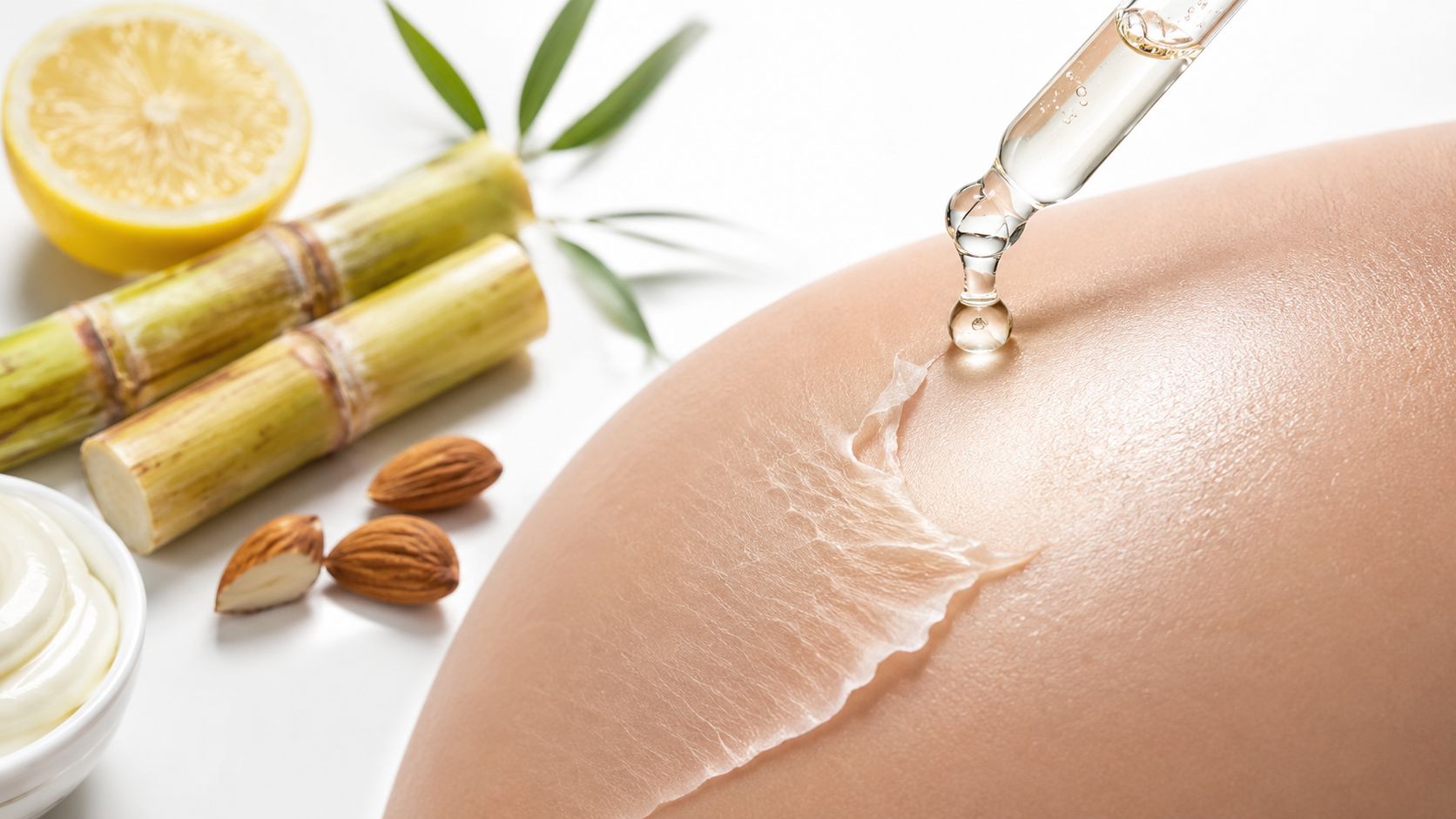
Alpha hydroxy acids are naturally occurring organic acids found in specific food sources: glycolic acid comes from sugarcane, lactic acid is present in dairy and fermented vegetables, malic acid is found in apples, citric acid occurs in citrus fruits, and tartaric acid is present in grapes, as outlined in this overview of natural AHA sources.
That source list helps make ingredient names feel less abstract. These are real acid families with different personalities in a formula.
The main ones you'll see most often
| AHA type | Common source | What it's generally known for |
|---|---|---|
| Glycolic acid | Sugarcane | Fast, effective surface renewal |
| Lactic acid | Dairy and fermented vegetables | Gentler exfoliation with a more cushiony feel |
| Citric acid | Citrus fruits | Often used to support brightening formulas and adjust formulation balance |
| Malic acid | Apples | Usually appears as part of a broader acid blend |
| Tartaric acid | Grapes | Also often used in blends rather than as the star ingredient |
Glycolic acid and why people talk about it so much
Among AHAs, glycolic acid is especially well known because it has the smallest molecular weight. That smaller size helps it penetrate the epidermis more readily, which is why it often gets chosen for rough texture and visible dullness.
In practical terms, glycolic acid tends to feel like the AHA you notice first. It can give skin that smoother, more polished feel, but it also asks for more care if your skin is easily bothered.
Lactic acid and the softer route
Lactic acid is often the one I suggest people notice first when they want the idea of exfoliation without the reputation of harshness. It exfoliates, but it's also associated with humectant behavior, meaning it helps attract water to the skin. That can make it feel more comfortable in routines focused on softness and hydration.
This is one reason lactic acid makes sense in Japanese skincare, where layered hydration matters so much.
Mandelic acid and the gentle conversation
Mandelic acid wasn't included in the source list above, but you'll often see it discussed alongside AHAs because many people consider it a milder option. If you're comparing gentler peel choices, this overview of the benefits of mandelic acid peels gives useful context.
If your skin also needs calming support, this guide to Centella Asiatica extract pairs well with the AHA conversation because exfoliation and soothing ingredients often work best together.
Skincare Benefits and Ideal Concentrations
AHA results usually show up in the mirror in a quiet way first. Your skin starts looking less flat, rough patches feel less obvious, and the surface catches light more evenly. In Japanese skincare, that kind of change matters. The goal is skin that looks clear, smooth, and cared for every day, not skin that has been pushed too hard for a fast result.
AHAs help by loosening the dry, worn-out cells that sit on the surface and make skin look tired. A simple comparison helps here. It works like gently sweeping away the dusty layer on a wooden floor so the natural finish underneath can show again. You are not changing your skin overnight. You are helping fresher skin come forward in a controlled way.
What results people usually notice first
The first improvements are usually about texture and radiance.
You may notice:
- Smoother-feeling skin because surface buildup is reduced
- Brighter-looking skin because a more even surface reflects light better
- Less obvious dry roughness around areas that tend to feel coarse
- A softer look to fine lines when dehydration and flaky buildup are not drawing attention to them
- A more even-looking overall tone as dull surface cells clear away over time
For readers focused on post-acne marks or lingering discoloration, this guide on how to fade dark spots with a routine that supports clearer tone adds helpful context.
Why concentration and pH change the experience
Concentration tells you how much acid is in the formula. pH helps determine how active that acid feels on the skin. Both matter. A product can sound impressive on the label and still be a poor fit if the formula is too aggressive for regular use.
That is one reason Japanese AHA products are often appealing. Many are designed with restraint. Instead of chasing the strongest possible peel effect, they aim for steady exfoliation that works well with hydrating lotions, essences, and creams. This matches a core J-beauty idea. Skin tends to respond better to consistency than to force.
For many people, lower-strength daily or near-daily formulas feel easier to live with than stronger treatments. Mid-strength products can suit skin that is already comfortable with acids and wants more visible smoothing. Higher concentrations usually belong in peel-style products and call for much more caution.
A useful rule is simple. Choose the lowest strength that gives you visible improvement without leaving your skin tight, hot, or overly shiny. Tingling is not the goal. Comfortable progress is.
A well-made AHA product should feel controlled, not dramatic. In J-beauty, good exfoliation is measured by how well it supports the rest of the routine.
Integrating AHAs into Your J-Beauty Routine
AHAs work best when they slide neatly into a calm, orderly routine. That's very much in line with J-beauty, where each step has a purpose and the skin barrier is treated with respect.

Where an AHA step usually goes
In a classic Japanese routine, an AHA product usually comes after cleansing and before your more hydrating layers. If you already use softening lotion, essence, or serum, the acid step normally sits just before those.
For readers who still mix up hydrating layers, this explainer on the difference between toner and essence makes placement much clearer.
A simple order looks like this:
- Cleanse well. If you wear makeup or sunscreen, double cleansing often makes sense.
- Apply your AHA product. Use it on dry or slightly damp skin, depending on the product directions.
- Follow with hydration. Think lotion, essence, or serum focused on replenishing water.
- Seal with moisturizer. This helps limit the dry, tight feeling some people get after exfoliation.
How often to start
Starting slowly often yields better results. Once or twice a week is often a sensible beginning, especially if they're new to acids or already use active ingredients elsewhere in the routine.
What you pair with AHAs matters too.
- Hydrating ingredients can make the routine feel far more comfortable. Formulas rich in humectants, such as those often associated with Hada Labo-style routines, are perfectly suited for this.
- Barrier-supportive moisturizers help reduce that stripped feeling people sometimes blame on the acid itself.
- Too many strong actives at once can turn a good idea into irritation. Be careful about stacking exfoliating acids, retinoids, and other high-intensity treatments in the same session unless you already know your skin handles it well.
A visual walkthrough can help if you're trying to picture product order in real life:
A simple J-beauty mindset for acid use
Japanese skincare usually rewards patience. If your skin feels smooth, calm, and balanced the morning after, you're probably on the right track. If it feels shiny, hot, or unusually tight, the routine needs less intensity, not more.
AHA Safety Side Effects and Comparisons
You use an AHA at night because your skin looked dull and uneven. The next morning it feels smoother, but by afternoon your face turns tight, stingy, and a little flushed in the sun. That is the part many people misunderstand. AHAs can be very helpful, but they work best with the quiet, disciplined habits that Japanese skincare is known for.
In J-beauty, exfoliation is rarely treated like a contest. The goal is refined, comfortable skin, not the strongest possible peel. AHAs loosen the bonds between older surface cells, so fresh skin comes forward more easily. That fresher layer can also be more reactive if the formula is too strong, the routine is too crowded, or daily UV protection is inconsistent.
What safe home use looks like
The U.S. Food and Drug Administration explains that consumer AHA products are generally considered safe within home-use limits, including formulas at 10 percent or less with a final pH of 3.5 or higher, as outlined in the FDA page on Alpha Hydroxy Acids and cosmetic safety.
Those numbers are a guardrail, not a promise that every product will feel fine on every face. Formula design still matters. So does the rest of your routine. A well-made Japanese lotion with buffering humectants can feel very different from a sharper, more aggressive acid product at a similar percentage.
Patch testing helps, especially if your skin is reactive, recently irritated, or already using retinoids, vitamin C, or other exfoliants.
Side effects worth watching for
Mild tingling for a short time can happen. Persistent burning, visible redness that lingers, swelling, peeling that goes beyond light flaking, or post-inflammatory darkening are signs that the product or frequency is too much for your skin.
Sun sensitivity deserves special attention. AHAs remove some of the dull outer buildup that acts like a rough, uneven shield. Your skin then looks brighter, but it also has less margin for careless sun exposure. This is one reason Japanese skincare pairs treatment steps with reliable daily sunscreen so consistently. Products from lines such as Anessa, Biore UV, and ALLIE fit that philosophy well because they are designed for regular wear, not occasional rescue use.
AHAs compared with BHAs and PHAs
If acid labels blur together, it helps to sort them by where they do most of their work.
| Acid family | Main behavior | Often chosen for |
|---|---|---|
| AHAs | Water-soluble, work mainly on the skin surface | Dullness, rough texture, fine lines |
| BHAs | Oil-soluble, move into pore lining more easily | Congested pores, blackheads, oily skin |
| PHAs | Larger molecules, usually feel milder on skin | Sensitive skin that still wants gentle exfoliation |
A simple way to remember it is this. AHAs polish the surface. BHAs reach into oilier areas more easily. PHAs tend to move more slowly and gently.
That is why many Japanese routines favor AHAs or PHAs for dry, dull, slightly rough skin, while BHAs make more sense for visible congestion and excess oil. If you want a plain-English category breakdown, this skincare acid dupes guide is a helpful comparison.
Choosing Your Authentic Japanese AHA Product
Choosing a Japanese AHA product gets easier once you stop asking, "What is the strongest formula?" and start asking, "What role should this play in my routine?" In J-beauty, treatment is rarely treated like a one-step fix. It is part of a system. Cleanse, soften, treat, hydrate, protect. Your AHA product should fit that rhythm, not fight it.

How to match product type to your skin
The format matters as much as the acid itself. A wash-off product gives your skin a brief, controlled introduction, which suits beginners or easily irritated skin. A leave-on lotion or essence stays in contact longer, so it usually makes more sense for persistent dullness, rough texture, or uneven tone.
Texture also tells you a lot. If your skin often feels tight after cleansing, look for formulas that include humectants and a softer, more cushioning finish. Many Japanese products are designed this way because the goal is steady use with minimal disruption, not a harsh peeling effect.
A simple guide helps:
- Choose a wash-off formula if you want a cautious start or your skin reacts quickly.
- Choose a leave-on lotion or essence if you want more visible help with dullness and uneven tone.
- Choose a hydrating formula if your skin is dry, tight, or prone to feeling stripped.
- Choose products with elegant layering in mind if you already use toner, essence, milk, or gel cream in a multi-step routine.
Japanese brands often stand out here. Hada Labo, Fancl, Meishoku, Kose, Transino, and Shiseido tend to focus on how a product feels day after day. That matters because a well-made AHA product should be easy to keep using, easy to layer, and easy to live with.
Why authenticity matters
Authenticity matters for more than brand loyalty. With Japanese skincare, the original market version often reflects the texture, dispenser, ingredient balance, and quality-control standards the brand intended. That can affect how the product spreads, how it layers under other steps, and how consistent the experience feels from bottle to bottle.
This is especially important with actives. A formula that is too aggressive, poorly stored, or not the intended version can throw off the gentle balance that makes many J-beauty routines work so well. Japanese skincare philosophy usually favors refinement over force. You are looking for a product that supports smoother, brighter skin while still respecting the barrier.
Analysts at Global Market Statistics project the global alpha hydroxy acid market to reach USD 417.17 million by 2035, with a 2.58% CAGR from 2026 to 2035, according to this report on the global Alpha Hydroxy Acid market. That projection does not choose the right bottle for you, but it does show that AHAs remain an established part of modern skincare.
A practical example is a brightening lotion such as Transino Medicated Whitening Clear Lotion EX, which may appeal to someone focused on clarity, smoothness, and tone within a layered Japanese routine. For daytime support, pair your AHA step with a sunscreen you already know you will wear consistently, as noted earlier.
The best Japanese AHA product is the one that fits your skin condition, your tolerance level, and the quiet discipline of a routine you can keep.


共有する:
Maruchan vs Nissin Ramen: Which Is Best for You?
Best Shampoo for Oily Scalp: A Japanese Beauty Guide